November 2024. Every railway rambler’s dream: stations for sale.
Station residences at both ends of the spectrum are currently, or were recently, on the market, with something else in between. Member Steve Wall sent in details of St Helens railway station on the former Isle of Wight Railway which has just come onto the market for the first time in 70 years. He adds: ‘We visited it with Railway Ramblers many years ago and were given a superb tea by the owner. A beautiful property and location which I am sure any Railway Rambler would love to own’. St Helens ‘Station House’, which was the penultimate stop on the Bembridge Branch, boasts seven bedrooms, a conservatory and 14 acres of garden on the edge of a nature reserve. Rather ominously however, the County Press reported that ‘Planning permission to remodel the dated house into a modern, contemporary space has already been approved.’
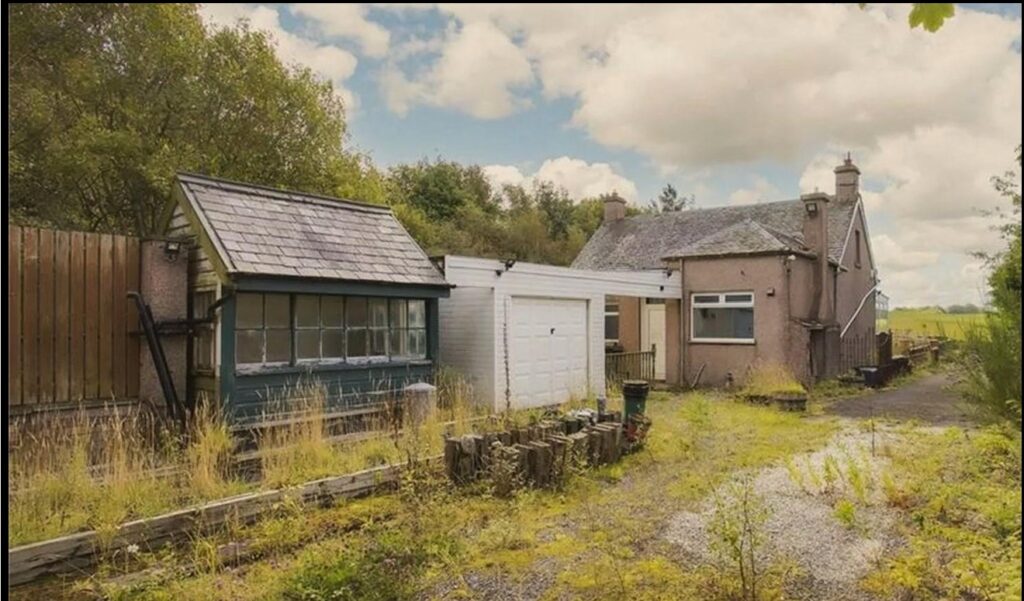
Meanwhile, without in any way encouraging trespass, you never know what you might find if you stick your head round the back of a house…in the picture above is a surprising survivor not visible from the road, where only a most uninspiring frontage may be seen, at the ex-North British Railway station about half a mile east of Penicuik. It was on the Hardengreen & Peebles branch but looks in a rather parlous state. However, the most curious item on the market is a wedge-shaped plot of land at Gartly Station in Aberdeenshire. Although the line through Gartly, from Aberdeen to Inverness, remains open, the station itself closed in 1968. The station building survives, now as a private residence, as do both platforms, albeit in somewhat degraded state. The land for sale was part of the goods yard, and includes the remains of what appears to be a cattle dock or loading bay. While St Helens (Isle of Wight) came in at a cool £1.5 million, Pomathorn is a more reasonable £265,000, and the land at Gartly is a veritable snip at just £42,000. On the other hand, quite what you would do with it, apart from watching the occasional train go past, is another matter. (Steve Wall; RR)
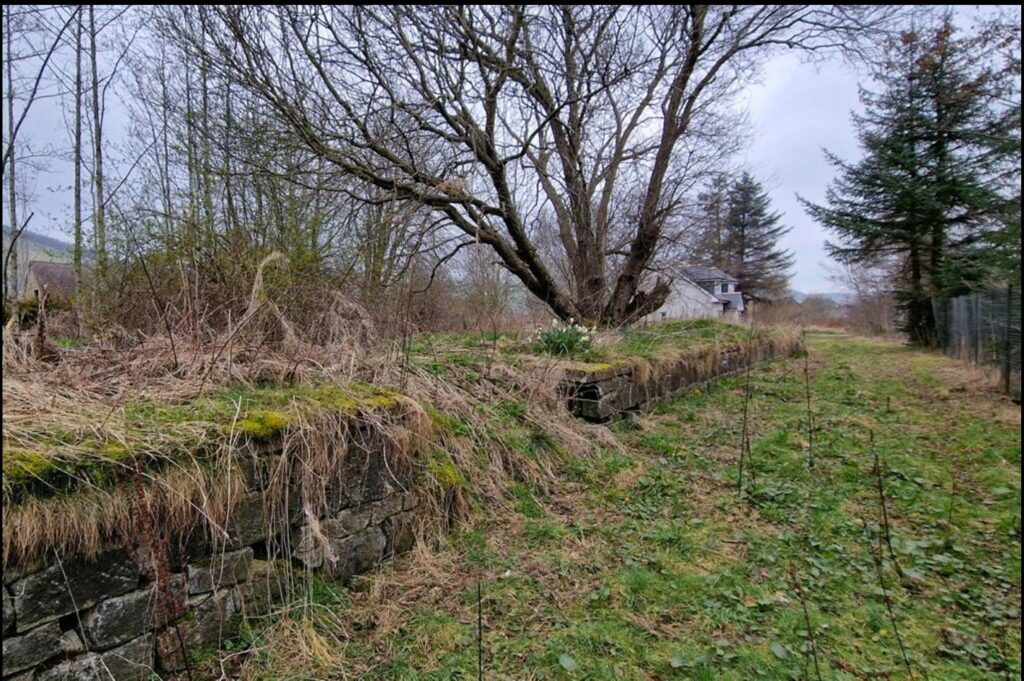
November 2024. Branksome, Bournemouth, Dorset.
The ‘Branksome Triangle’ was a complex of lines on the west side of Bournemouth allowing access to the LSWR terminus at Bournemouth West from both directions, as well as giving a through line from Bournemouth Central (as was) to Poole and Weymouth. There were also some sidings, a coal yard and a turntable inside or next to the triangle. Today, while the western viaduct remains in use, and the southern spur gives access to Bournemouth Traincare Depot, the eastern viaduct lies unused and overgrown. The local council has now stated that it plans to demolish the ten arch structure by 2035, claiming it is ‘life-expired’. Step forward the ‘Branksome Triangle Committee’ who are determined to save it by acquiring the viaduct for the local community. More on this in the Spring issue of RR. (Daily Echo)
November 2024. Shepton Mallet and Yatton, Somerset.
A specially-built piece of decking has been laid across two existing railway bridge abutments over the B3136 in Shepton Mallet allowing the latest section of the Strawberry Line path in Somerset to come into use. The 15-metre long structure did require additional foundations to ensure that HGVs could pass under it, and these were completed by volunteers. The bridge is part of a larger project to connect West Shepton Playing Fields and the town centre and was due to open to the public in early November. At the same time, the Duck Lane bridleway in Yatton has opened, connecting the Pier to Pier Way (the 13-mile route between Weston-super-mare and Clevedon) and the Strawberry Line. Cllrs Steve Bridger and Wendy Griggs, North Somerset Council’s ward members for Yatton added in a statement: ‘We’re really pleased to see this short but vital link completed and to such a high standard. It will unlock a safer route to the popular Pier to Pier Way and is an important milestone towards the bigger ambition for a more direct traffic-free route from Yatton to Clevedon, extending the Strawberry Line already in place’. (Somerset Live; Forgotten Relics)
October 2024, Corwen, Merionethshire.
Work has begun to upgrade a section of the North Berwyn Way long distance footpath between the town and Cynwyd to an “active travel” route also suitable for cycles. It includes a tarmac surface and a pedestrian crossing on the A5 road at the Corwen end. The section from the former A5 overbridge (SJ 070433) to a footpath crossing approaching Cynwyd (SJ 057147) is on the railway trackbed (closed prematurely by flood damage 14 December 1964). (Chris Parker)
October 2024. Bath, Somerset.
Work has commenced to resolve flooding issues on the Two Tunnels path in Bath by the installation of a pump at the entrance to Devonshire Tunnel. The aim is divert flood water uphill to bypass the original Victorian cast iron pipework, which was once used to drain water away from the railway line. The work is being carried out on behalf of the cycling charity Sustrans, which owns and manages the route, and is expected to take eight weeks to complete. Councillor Paul Roper said: ‘The original Victorian drainage in the Devonshire Tunnel has not been able to withstand the increasingly severe rainfall we have experienced in recent years’. (BBC; Peter Billington)
September 2024. Harlech, Merionethshire.
Part of a three-mile railway on Morfa Harlech, the sand dune system west of the Cambrian Coast line between Harlech and Tygwyn, has been cleared by National Resources Wales to enable an archaeological inspection and survey. Vehicles towed along it were used by soldiers on the 1,000 acre World War II Morfa Gunnery Range for anti-tank gun target practice (on a smaller scale, part of the by then disused Welsh Highland Railway was put to similar use). The cleared section has an embankment which is two metres high with a wall made from concrete-filled sandbags. Much of the range is still hidden beneath Harlech Forest (parts of the dunes are surprisingly well vegetated!) but there is public access to its wartime concrete roads which appear on OS maps; part of the area is now a National Nature Reserve. The railway embankment can be seen at the most westerly side of the forest where it opens out onto the dunes. There is no suggestion that it is walkable but clearly it is open to investigation! The lead archaeologist describes it as a ‘really exciting relic, about which we knew very little before’. It was presumably of standard gauge as Cooke’s GWR Track Diagrams show a main line connection laid 31 May 1942, brought into use the next day (!) and taken out of use 31 August 1949 somewhere north of Morfa level crossing which is about ¼ mile north of Harlech Station. The exact position is unknown and no other reference has been found, so any further information would be welcome. (Chris Parker)
August 2024. Summerseat, Lancashire.
Plans have been submitted to turn the old goods shed at Summerseat, which was built in 1847 and stands next to the East Lancashire Railway’s (ELR) line from Bury to Rawtenstall, into a restaurant. The Bolton News reports that ‘it was designed to serve the local cotton mills with the transport of raw materials inward, and the finished products outward. It has been designated a Grade II-listed building, mainly because it contains a rare and working hand-cranked crane’. A local company, Mala Cuisine Ltd., is behind the plans and states that ‘It will be themed with railway paraphernalia and links with the railway would be forged, encouraging train passengers to break their journey at Summerseat Railway Station to enjoy a meal in the engine shed (sic)’. The tracks to the shed were removed around the time the line was singled in 1967. A spokesman for the ELR commented: ‘The Rowlands Road railway warehouse survives as an excellent example of a small railway goods shed or warehouse from the mid-19th century. The exterior of the building remains virtually unaltered from the time of its construction. The hoist system probably dates from 1860 and is a very rare in-situ survival of this type of feature. As such it has high archaeological value.’ (The Bolton News; Forgotten Relics)
August 2024. Rudgate, North Yorkshire.
The national game of bridge filling fought between National Highways (NH), campaigners and local councils has moved on to Rudgate, near Tadcaster in North Yorkshire, where a single masonry arch was filled in by NH in 2021. Retrospective planning permission – a legal loophole if ever there was one – has now been granted by North Yorkshire Council, meaning the blockage will remain in place. The bridge, which dates from the 1840s, had an assessed capacity of 32 tonnes. The narrow country lane passing over it was prohibited to vehicles of more than 3 tons unladen, although it was used by some heavier vehicles, including agricultural machinery. The structure was not listed. (HRE Group)

August 2024. Wye, Kent and Helston, Cornwall.
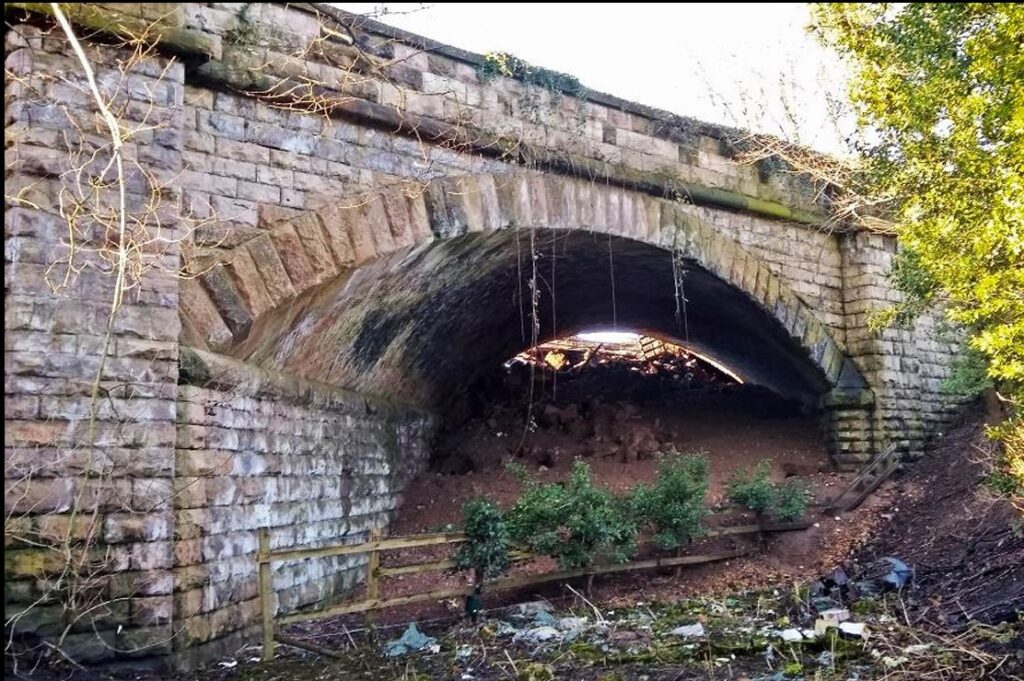
Another signal box has found its way from Network Rail to a heritage line as the box from Wye, on the line from Ashford to Canterbury, has been donated to the Helston Railway, based at Prospidnick. The Falmouth Packet reported that the box, ‘built in 1893, is a Saxby & Farmer Type 12 design – a typical style on the South Eastern Railway and the London, Chatham & Dover Railway between 1890 and 1894. The signal box has been disused for several years, but still contained around 20 levers that, along with the lever frame and locking mechanisms, have all been donated to Helston Railway’. The box will be rebuilt at the heritage line’s base at Trevarno Farm as part of their project to restore three miles of the original branch. (Falmouth Packet; Forgotten Relics)
August 2024. Cirencester, Gloucestershire.
Cotswold District Council has put the old Cirencester Town station building up for sale following a failure to find a suitable investment partner for its renovation. The west wall, adjacent to the remaining section of platform, is now unstable with extensive rot in its structural timbers and scaffolding has been erected to carry out essential repairs. Cost issues caused an Arts group to pull out of a renovation proposal leaving the future uncertain for a building which had been used as a storage facility for around thirty years. However, it has now lain vacant for some time and substantial work would be required to make it usable. The Council remains hopeful that a buyer with the funds to do so may be found. (Gloucestershire Live; BBC; Forgotten Relics)
August 2024. Crathes, Kincardineshire.
Over the years many Railway Ramblers have walked the Deeside line from Aberdeen to Ballater. They will have seen the remains of Crathes station near to the Royal Deeside Railway and a rather good coffee bar. The original station has been empty and decaying for years but things are changing. The building formerly used by the silversmith Malcolm Appleby has been done up as a house. The area around the building has been cleared of foliage and french windows installed. Who the new owner is and what he will do with the house I don’t know but clearly someone will occupy it in due course. (David Picken)
August 2024. Whitchurch, Hampshire. Hampshire County
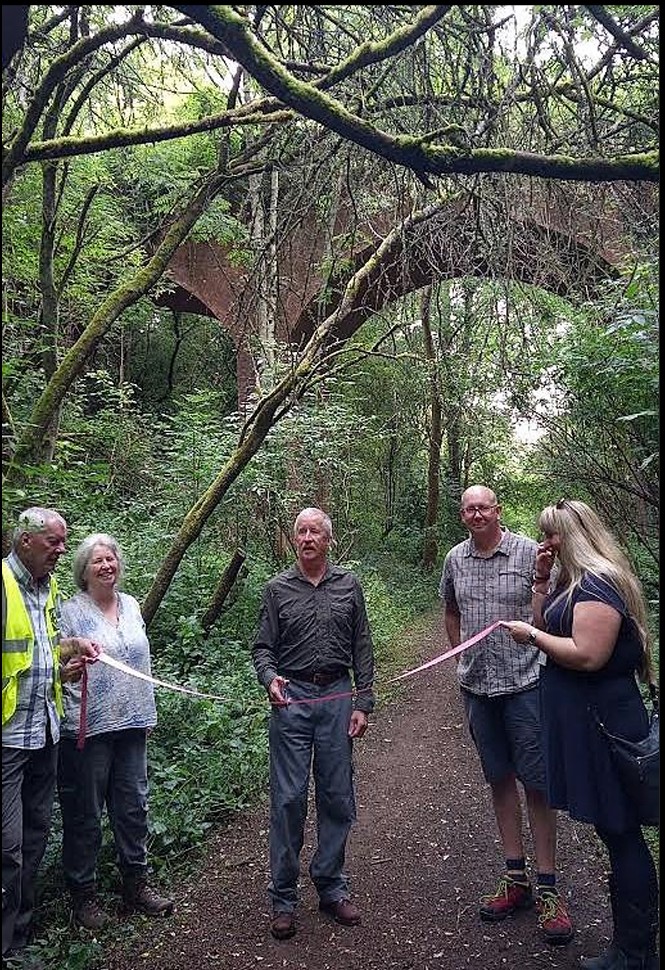
Council has finally completed all the legal work and the Whitchurch Railway Cutting has now been formally added to the Definitive Footpath Map for Hampshire and has been allocated the path number 248/504/1 up as far as the three-arch bridge and then 248/504/2 beyond that, as far as the Harroway embankment. Conversation continues regarding access up the embankment to provide a safe exit onto the Harroway at the northern end. I attended the official opening of the new Whitchurch DNSR Railway Cutting Public Right of Way on Tuesday 20 August (Graham Lambert)
July 2024. Washington, Co. Durham.
North East Mayor, Kim McGuinness, has pledged £8 million into efforts to extend the Metro and restore part of the mothballed Leamside railway line, although the timing seems rather unfortunate given the government’s plug-pulling of much railway funding. Plans to expand the current Metro network would see trains carry on from the current terminus at South Hylton, cross the Victoria Viaduct, and then run through Washington and Follingsby before connecting back to the Metro line at Pelaw. That would utilise the northern section of the former Leamside line, featured in the recent Walks Supplement by Phillip Earnshaw. Washington is claimed to be the fourth largest town in the UK without a rail link and there have long been calls to resolve that situation, while another key aim of the Metro extension is to offer better connections to the International Advanced Manufacturing Park in Washington and Follingsby Park Industrial Estate where Amazon is located. There are also potential future extensions that would allow trains to continue on from the Washington loop towards South Shields after reaching Pelaw and also a new connection between Tyne Dock and East Boldon, allowing for much quicker travel between Sunderland and South Shields. There is also an aspiration to reopen Ferryhill Station. If that happens, then it could allow for the Leamside Line to be connected up to the Stillington Line and pave the way for a new Tyne-Tees passenger rail service. (Forgotten Relics; Chronicle Live)
July 2024. Ramsey, Isle of Man.
Queen’s Pier in Ramsey, Isle of Man, has seen its first train run since it closed for safety reasons in 1990. Volunteers from the Queen’s Pier Restoration Trust signed a five-year lease in 2017 to restore the first three bays of the pier but now hope to have completed eight by the end of the summer. The train movements on 24 July were to teach and certify drivers and guards, as part of a process to obtain an operating certificate from the UK Railway Inspector. A video is available on the Trust’s Facebook page showing a test run by the train. It is hoped to be able to open to the public in the near future. (Isle of Man Examiner; Jane Ellis)
July 2024. Congham, Norfolk.
You win some, you lose some. After defeats at Balcombe and Great Musgrave, National Highways has won its case at Congham in Norfolk, after a government inquiry ruled that the infilling could remain. This came after West Norfolk Council had ordered the concrete removed from the bridge, one of just six built to a design by William Marriott, which included curved wingwalls. The bridge carries a minor road over the ex-Midland & Great Northern Joint line from South Lynn to Fakenham and Melton Constable. Whilst National Highways claimed the bridge was ‘unsafe’, the campaign group HRE called the action ‘destructive and unnecessary’. (Forgotten Relics; Eastern Daily Press)
June 2024. Velenje, Slovenia.
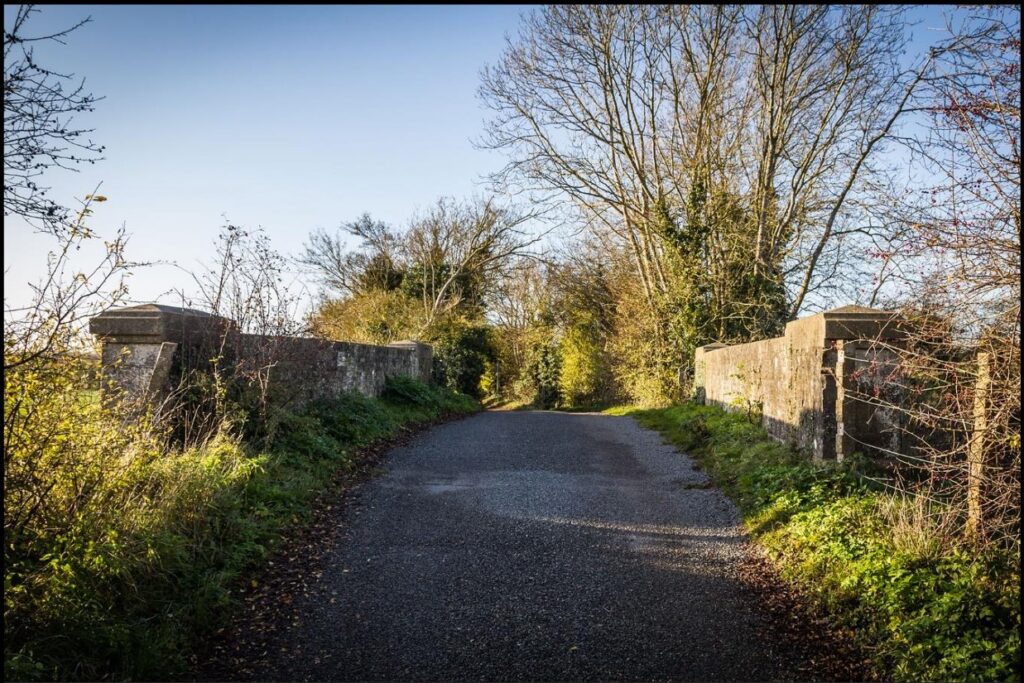
One of the most picturesque cycling routes in the area has been inaugurated in the north of Slovenia, linking the towns of Velenje and Dravograd using a series of disused railway tunnels. From Dravograd a cycling path continues on to the Austrian side of the border, and another one heads on to Maribor. The 35 km route between Velenje and Dravograd makes use of an abandoned railway line, hence its name Štrekna, a local dialect word for railway track. It affords panoramic views of the Pohorje Massif and Mount Uršlja Gora on the way. Its last stretch, a 9.4 km leg between Velenje and Gornji Dolič through the Huda Luknja gorge, was inaugurated with a ceremony on 21 May featuring senior officials and cyclists in vintage dress. The project involved reconstruction of three existing railway tunnels, one of which is 420 metres in length, as well as construction of a new 105 metre tunnel, four replacement bridges over the main road, two new bridges and four rest areas, as well as the renovation of two wooden bridges. Slovenia has invested more than €200 million in cycling infrastructure in the past ten years. (Slovenia Times)
June 2024. Castlefield Viaduct, Manchester.
The National Trust is to submit plans to extend its garden project further along the disused viaduct with the aim of utilising the whole 330 metres of its length. Currently the project ends midway along the listed Manchester landmark, with the unused section left overgrown with weeds. New exit and entry points, along with a new walkway to give people access in the directions of Pomona, Salford and Trafford have also been proposed, alongside new community growing areas, and spaces for pop-up events. As ever, though, it all depends on funding and, in this case, generous donors. (BBC)
June 2024. Maerdy, Glamorgan.
Plans have been drawn up for Phase 2 of the Rhondda Fach Active Travel route, which would continue the path south from Station Road, Maerdy to Ferndale, mainly using the old trackbed of the Taff Vale Railway. The eventual aim is to rea ch Pontygwaith, further down the valley. Phase 3 leaves the route of the old line and joins National Cycle Network 81, while Phase 4 does use the alignment in the area of Ferndale. (Herald.Wales; Forgotten Relics)
May 2024. Uckfield, Sussex.
Wealden District Council is looking at the feasibility of creating an off-road cycle and footpath along the route of the disused railway line between Uckfield and Lewes. It has commissioned the charity, Greenways and Cycleroutes, to ‘scope’ the nine-mile project, which would pass through or near the locations of the two stations which used to be on this section of line: Isfield and Barcombe Mills. The former is now the headquarters of the heritage Lavender Line, while the latter is a private residence which, in recent years, has seen its railway remains downgraded. The route is safeguarded by protective policies within the current Local Plan that prevent any development which would significantly prejudice the reinstatement of the former railway line to Lewes, but this is one of those wishlist campaigns that appears doomed to never garner enough political or financial support. At the southern end, it is assumed the route would follow the Hamsey loop – last used in the 19th century – as the direct line to Lewes is missing several bridges and a viaduct in the town. (Steven Boyd; Wealden District Council)
April 2024. Barcombe, Sussex.
Campaigners say they are ‘delighted’ that a heritage railway bridge in Sussex is to be restored after its ownership was passed to the local council. Church Road Bridge in Barcombe near Lewes, Sussex, was the latest such structure under threat of being infilled with concrete by National Highways. In a statement, East Sussex County Council (ESCC) confirmed it had taken ownership of the site and engineers would be examining it prior to repairs ‘in due course’. It is likely that they have been advised only limited remedial work is required. Dr Hazel Fell-Rayner from the Historic Railways Estate (HRE) campaign group said: ‘We’re absolutely delighted that the ownership of the bridge will go to ESCC because they’ve been really determined to prevent any infilling of the bridge and to repair it sympathetically. Wildlife has really reclaimed this line and this place happens to be really close to ancient woodland so we’ve got this really special, beautiful intermingling of old railway heritage with really fantastic biodiversity and a really beautiful area.’ (BBC; Gifford Cox)
April 2024. Constable Burton, North Yorkshire.
The signal box from Hertford East has been relocated to the Wensleydale Railway (WR) and is currently in the process of being re-erected at Constable Burton, where it will control a passing loop. The nearest double track to the west is at Leyburn, and to the east at Bedale. The station at Constable Burton closed in 1954 and virtually nothing remains, and although the heritage line runs through the site there are no plans to reopen the station here. The box was donated by Greater Anglia, and according to David Walker, Director of the WR, ‘will be the largest signal box to be fully dismantled on the national network and re-assembled on a heritage railway.’ The main timber structure is now complete, and work continues on the outer walls, roof and chimney. (Rail Advent)
April 2024. Denholme station site, West Yorkshire.
It has been noted that Denholme station site has been redeveloped into a new housing estate. On the eastern side of the site a lit hardcore path has been constructed from its north side to the south. This can be accessed from the housing estate itself. The path extends beyond the last road alongside a house with a small wooden boundary fence. Beyond this, the formation passes into a cutting prior to Hamers Hill Tunnel. Whilst this is positive as it shows the potential for an extension of the path southwards towards Thornton, the northernmost point of the new path is even better. Here the path comes to an abrupt end near housing with no fencing stopping you walking towards Doe Park Tunnel. What is even more encouraging is a new cycle path signpost which has been erected pointing down the cutting which says ‘SP-Cullingworth’. This would indicate that further developments may be afoot, which hopefully will include Doe Park Tunnel and the cut and cover structures beyond, fingers crossed. (Phillip Earnshaw)
April 2024. Finmere, Buckinghamshire.
A good proportion of the southern part of the Great Central Railway north of Calvert towards Brackley is in the vicinity of, or will go under, HS2, before it moves away en route to Birmingham Curzon Street. Whilst the bridges have gone at Finmere the original brick abutments still support a construction bridge for HS2 which passes overhead. It will be interesting to see in the fullness of time whether any of the original brickwork will survive. (Phillip Earnshaw)

April 2024. Alnwick, Northumberland.
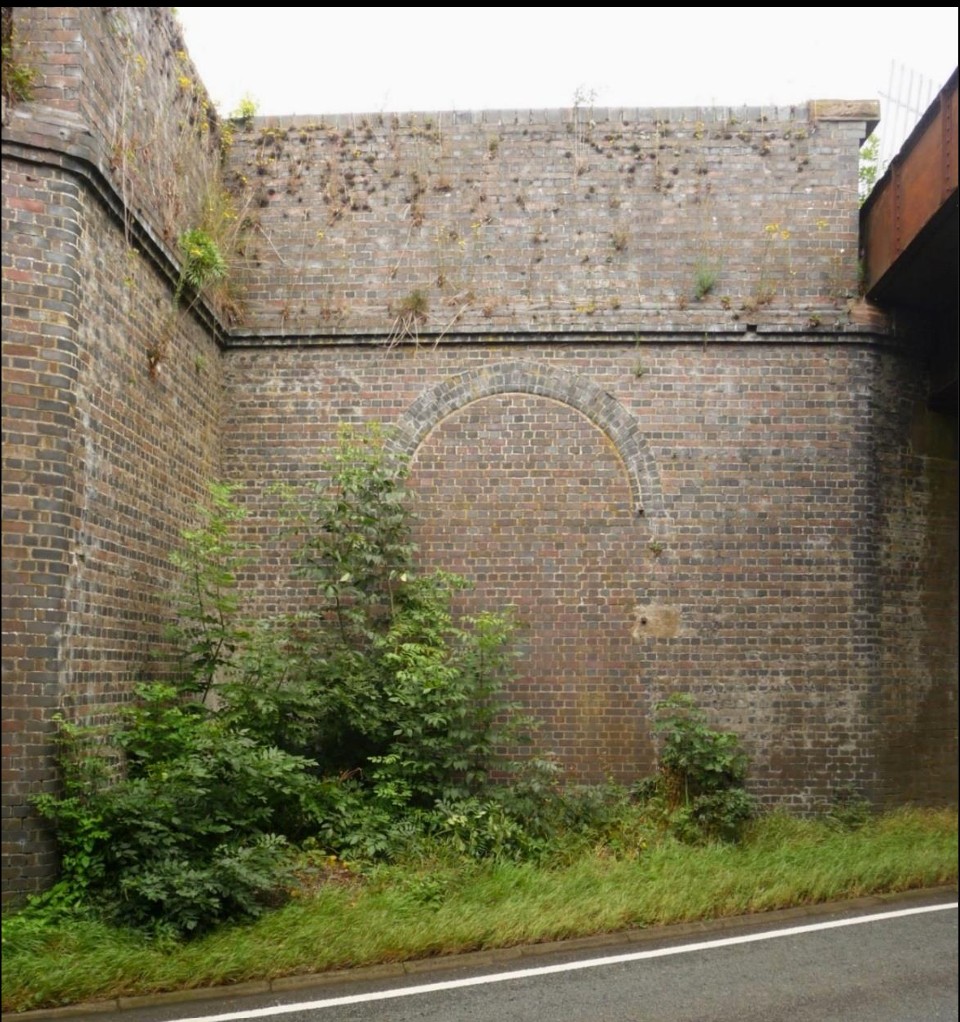
RR generally refrains from reporting on projects that are no more than wishlists, and the proposed 97-mile Borderline Greenway in Northumberland would very much appear to be in that category. However, the company behind the project was formed in the wake of the National Highways infilling fiasco, when a bridge in the town was threatened with the ‘Musgrave treatment’. That has since been averted, and also Phase 1 of the path is underway, albeit a short section (just under two miles) along the Cornhill branch south-west from Alnwick to a point near Rugley Farm, but even that requires a replacement bridge at Greensfield on the edge of the town. Substantial housing has recently gone up along this route so it is gratifying to know that the trackbed has been retained. Further progress will require serious funding as the line, much of it in cuttings, has been left to its own devices since closure in 1953. The first station on the branch, Edlingham, is in private hands and was recently on the market. Meanwhile, it has also been reported that the wonderful train shed at Alnwick station, now the home of Barter Books, is to receive significant repairs to the roof and glazing, in order to make it watertight. (Chronicle Live; Northumberland Gazette)
April 2024. Whitley Bay and Bedlington, Northumberland.
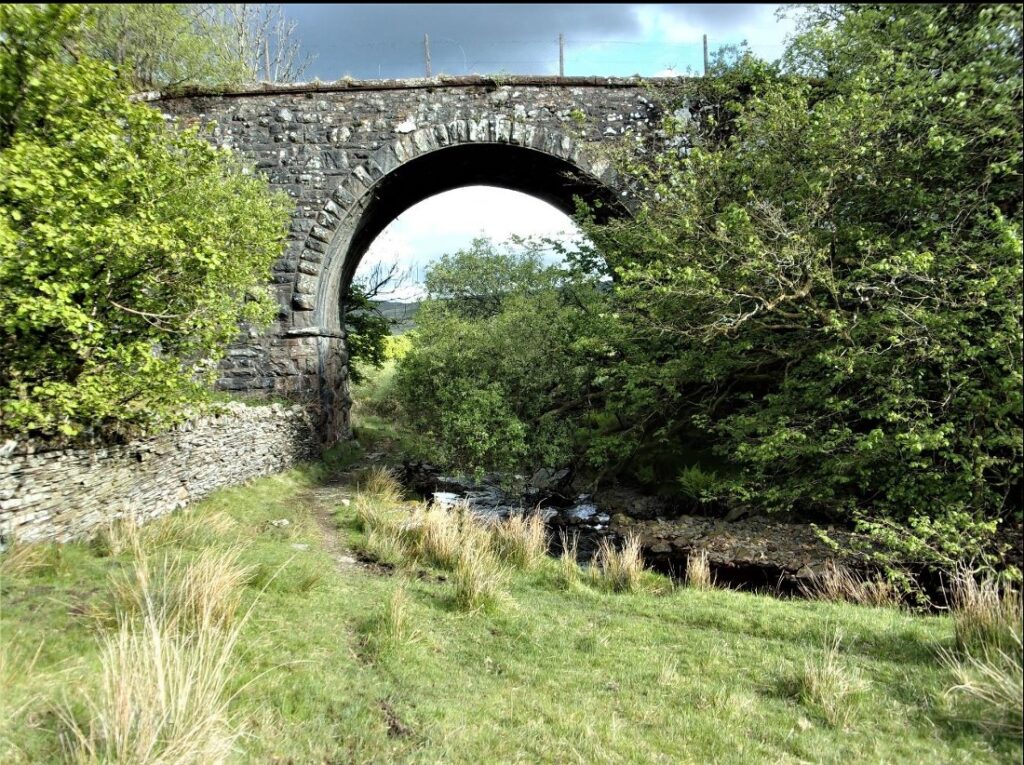
Plans have been submitted regarding another railway-age building on a Northumberland station platform, yet this time, at Whitley Bay, it is to be saved. Railway buffs will be amused at its being described in the local press as a ‘train shed and passenger building’ though. One reader commented: ‘Train shed? Must have been used by Hornby trains, it’s tiny!’ Despite media outlets referring to it in these terms, the structure looks like an old store of some kind. Again, any local information would be welcomed. Plans for a community hub, including a bakery and a cookery workshop space on the site have been submitted to North Tyneside Council. The application proposes converting the building opposite the southern end of Victoria Terrace, into a ‘community-focused enterprise’. Of greater interest to railway-minded readers though is the news that the glass canopy at Whitley Bay Station is to be repaired following storm damage. This contrasts with the follow-up item on Bedlington (see earlier news in RR 181, p30) where the building next to the soon-to-be-reopened station has been demolished. Over 1,000 people had signed a petition for its retention, while East Bedlington Parish Council had proposed restoring the derelict building into a community hub and heritage centre. (Chronicle Live; Forgotten Relics; Northumberland Gazette)
April 2024. Collins Weir, Lancashire.
Thanks to a recent change in the course of the River Leven and the washing away of thousands of tons of sand, about 200 yards of a 19th century tramway became visible last month. A local man, Jonathan Ryland, out for his Sunday walk, discovered the sizeable length of track at Collins Weir, near the Leven Viaduct on the extant Furness Line. Contractors built the weir in 1847/48 in an attempt to keep the main channel on the Ulverston side of the Leven Estuary for ships to gain access to Ulverston Canal. The weir ran from Kephead to the Black Scars, however the use of the canal was found to be limited due to an inadequate water supply. There were suggestions to capture water from the Rivers Leven and Crake and a dispute ensued over a scheme to add an extension to Collins Weir which resulted in an Admiralty inquiry. Construction of the railways in the few years that followed however soon killed off the need for the use of the canal. As the area is private land and also dangerous due to quicksand, readers are advised to look at the excellent pictures taken by Mr Ryland (type ‘nwmail old cart line’ or something similar into your search engine). Due to the ever shifting tides, the breakwater construction railway (presumably horse-drawn) will probably not be visible for long anyway, but there is a book about it by Jack Layfield: Ulverston Canal & the Construction of Collins Weir. (NWMail; Peter Billington)
March 2024. Mumbles, Glamorgan.
The Mumbles Railway Trail project has seen £7,450 used to install replica station signs along the route, plus information boards, posters and murals at key points on the trail. The use of QR codes has helped to bring alive the trial, providing smartphone access to video footage, audio and historical information. Great Western Railway’s funding also allowed for the development of an Augmented Reality mobile application, including the ability to ‘walk around’ a 3D Mumbles Railway train. Now GWR is inviting bids for 2024-25 for its Customer and Community Improvement Fund that show a link to the railway and address an area of social need. (Swansea Bay News; Peter Dawson)
March 2024. Buckingham, Buckinghamshire.
Funding from Active Travel England will enable Buckingham Council to improve the railway path on the ex- LNWR Banbury branch through the town. The remaining cost will be covered by Section 106 developer contributions. Among the planned improvements are new wayfinding signage, the installation of solar studs, making the surface of the path more durable and increasing its width. Dedicated crossing points on Tingewick Road and the A421 at the northern and southern limits of the path to support onward travel are also envisaged. It is hoped the path will become part of a longer Buckinghamshire Greenway. (Rail Advent) March 2024. Medbourne, Leicestershire. Planning permission has been given by Harborough District Council for the expansion of the Medbourne Edge holiday lodge site, located between the villages of Medbourne and Slawston. There are already twenty holiday lodges – described in the original blurb as ‘luxury leisure homes’ – rather bizarrely planted along the narrow confines of the old line, a joint GNR-LNWR spur from Welham Junction to Hallaton Junction which formed part of the line between Melton Mowbray (North) and Market Harborough. At one time, trains for London Euston used this section. The quite lengthy entrance drive also uses the trackbed southwards, while to the north a section in a cutting is home to an artificial lake (large pond?). (Harborough Mail)
February 2024. Wortley, West Yorkshire.
The Wortley Curve, along with some adjoining land, has been sold at auction. The Curve ran between Wortley West Junction and Wortley South Junction on the ex-Great Northern line between Bradford and Wakefield and was, in effect, a Leeds avoiding line to the west. The line closed in 1985 but has remained in situ. The track is clearly visible at the northern end, though from the bridge over Oldfield Road – itself also extant – the line is heavily overgrown, while the points at the southern junction have been removed. The trackbed is crossed by a lengthy footbridge at New Wortley Recreation Ground that also goes over the main line. Some people hoped the local authority would purchase the land as a safeguard for possible future reinstatement yet the local Council rejected this option given that there are no plans to re-open the line. Latterly, the land was part of the Railway Paths Ltd. portfolio and was described by the auctioneer as ‘an irregular (sic) shaped parcel of land extending to approximately 3.1 acres and comprising land mainly used as a former railway line. The site currently has heavy tree coverage and still retains some of the old track but could be suitable for a variety of future uses, subject to any necessary consents. We understand that Japanese knotweed is present on site as well as some of the old rail track’. (David Newland-Edwards; David White; Yorkshire Post)
January 2024. Lowestoft, Suffolk.
In time for members to view it during the RR AGM walk in May, an enamel running-in board bearing the words ‘Lowestoft Central’ (the name of the station so long as there were two stations in the town) has been found and bought at auction, and returned to the station. A local railway manager and sign collector purchased it recently and has loaned it as part of an exhibition located in the refurbished Parcels Office. The double-sided dark blue sign was removed from the platform during modernisation in the 1990s, although, according to Lowestoft Central Project Director, Jacqui Dale: ‘Lowestoft Station already boasts the largest original enamel sign in the country, still proudly displayed in its original location on the front of the building.’ (Adrian Webb; Lowestoft Journal)
January 2024. Bennerley Viaduct, Notts/Derbys.
The two cast-iron benches paid for by Railway Ramblers are due to be moved from their storage container to their designated spot near the top of the eastern ramp this spring, yet moving four tons of metal is no easy undertaking. The Erewash Canal Preservation and Development Association lent the Friends of Bennerley their boat to transport the ballast to the base of the ramp, while UK Tool Hire offered the use of a mini-tracked tipper. Encouragement to take on the challenge came in the form of a comparison: ‘If a single navvy could shift twenty tons of rubble in a day, then a team can crack this one!’ (Friends of Bennerley Viaduct)
January 2024. Hayling Island, Hampshire.
Hampshire County Council has recently announced that it is investing £600,000 in upgrading the northern 1.2km section from the bridge to Esso Beach on the Hayling Billy Coastal Path. The project is funded by a Government Grant for Active Travel and is expected to be finished in time for this summer’s holiday season. In addition to a hard surface for cyclists and walkers there will be a soft path for horses. The path follows the course of the former Hayling Island Branch and was last walked by Club members, led by Peter Stitson, on the 16th September 2023. (Graham Lambert; Hampshire County Council)
January 2024. Burghclere, Hampshire.
The co-owner of Old Burghclere Station has reported that an appeal lodged by Lord Carnarvon’s Highclere Estate has been turned down. This follows a decision by the Council to decline the Estate’s planning application to build a grain store/dryer on the site of the old railway sidings and to demolish the signal box. The co-owner would like to thank Railway Ramblers’ members for their support, which has helped to bring about this decision. (Graham Lambert)
January 2024. Lichfield, Staffordshire.
Lichfield District Council have signed an agreement with the landowner of the former South Staffordshire line, Network Rail, which means the Back The Track group that have already restored the section between Brownhills and Pelsall known as the McClean Way, can commence clearing from Sandfields Pumping Station (close to the junction with the open Sutton Coldfield line in Lichfield) to the Fosse Way signal box just north of Brownhills. They hope to clear all three miles by the end of the year so it is usable by walkers. Cllr Doug Pullen, Leader of Lichfield Council, said: ‘I’m delighted that after many years of negotiation and an in-depth feasibility study, this agreement has been made with Network Rail allowing volunteers to get started on the greenway. When completed it will provide families with the perfect environment to enjoy cycling, walking and running in safety well away from busy roads. The work that Back the Track has already done is nothing short of a miracle, and we are fortunate that such a brilliant group are willing to continue their superb work.’ Tim Kitchen, from Back the Track, added: ‘In 2017 when we started clearing the disused railway line between Walsall and Brownhills, our ambition was always to get to Lichfield so there would be a destination at either end. We are delighted to have been asked by Lichfield District Council to share our expertise in helping to open up the missing link.’ (Tim Kitchen; Lichfield Live)
January 2024. Edinburgh, Midlothian.
The conflicting interests of public transport and self-propelled movement have come into focus due to plans to extend the Edinburgh tram network along a section of the Roseburn cycle path. A three-metre path would be retained alongside the tram tracks but this is not considered wide enough to accommodate walkers and cyclists safely. Cue the cries of ‘travesty’ and ‘appalling’ from those who use the path, yet the idea of a tram using an old railway line is hardly novel. And where else is it expected to go? (Forgotten Relics)
January 2024. Bedlington, Northumberland.
Further to the letter from Jeff Smith in RR 180, and despite local opposition, one of the two brick buildings on the platform at Bedlington was due to be demolished during the first week of February to make way for the new station. A letter sent to residents who live near the station, signed by Northumberland Line programme delivery director Neil Blagburn, said: ‘Removal of this building will free up space for a station forecourt and provide opportunities for new landscaping and public art. It will also minimise the potential for overcrowding along the station access, and shorten the distance passengers have to travel to the platform.’ Network Rail also cited expensive underpinning costs. RR though would like to know what the building was used for, as it occupies a rather curious position right on the corner of the station, adjoining two roads, yet at ninety degrees to the line and the adjacent main station building. Its appearance is that of a small goods shed, yet this is unlikely to have been its purpose, while it looks too large to have been a booking office. Reports say it is thought to date from between 1900 and 1910, and it does not appear on the older Ordnance Survey maps. (ChronicleLive)