December 2025. Hawes, Yorkshire.
The nascent Upper Wensleydale Railway (UWR) has produced an impressive map showing the route and structures on the six-mile Hawes branch, which they hope one day to reopen. Including the two extant viaducts and Mossdale Head Tunnel, the UWR has identified 39 officially numbered bridges, at least 19 unnumbered culverts, almost 6 miles of trackside drainage, almost 6 miles of cuttings and embankments and almost 12 miles of lineside fencing / walling which would all require attention. (Richard Bain; Upper Wensleydale Railway)
December 2025. Stockton, County Durham.
An archaeological dig on a section of the original Stockton & Darlington Railway has unearthed some interesting features including stone sleepers and clues as to how the line was dismantled in the mid-19th century. Dr Emma Watson, who is leading the project, said: ‘Some of the things we’ve discovered are unheard of and have changed the way we understand this area’. Previously, it was thought only timber sleepers had been used east of Darlington. The dig has also found evidence that coal, coke and limestone were carried on the line, as well as metalwork which indicates how the line was taken up. (BBC; Jane Ellis)
October 2025. Hawes, Yorkshire.
The Yorkshire Dales National Park Authority (YDNPA) has voted to use a public path creation order to establish a bridleway along much of the disused line between Hawes and Garsdale (previously, Hawes Junction) despite opposition from some of the landowners along the route. Their refusal to agree to a voluntary arrangement means the YDNPA will need to go through a full planning process unless further attempts at reaching a consensus are successful. The Midland Railway opened their six-mile Hawes branch in 1878, making an end-on connection with the North Eastern Railway, whose own branch came from Northallerton. The station building and site is now part of the Dales Countryside Museum. Two viaducts, Appersett – which featured on this magazine’s front cover in Issue 157 – and Mossdale, remain extant, as does Mossdale Head Tunnel, albeit having suffered severe distortion over the years since the line’s closure in 1959. According to the Local Democracy Reporting Service, YDNPA members agreed to a condition that creating the route would not stop any future plans to reopen that stretch of the Wensleydale Railway, however unlikely that might be. Two funding bids by a group called the Upper Wensleydale Railway failed in 2022, while the existing heritage line in the valley – currently cut back to Leyburn – is most unlikely ever to reach Hawes, never mind have the funds to continue to a junction with the Settle & Carlisle line at Garsdale. However, the safeguard provision is a welcome move on the part of the Authority. (RR)
October 2025. Lambley, Northumberland.
Engineers were close to completing repairs to Lambley Viaduct as we went to press, after a section of masonry became dislodged, necessitating closure of the path which crosses it. The work has been undertaken by the South Tynedale Railway Preservation Society, which own and maintain the bridges along the ex-Alston branch, with help from local engineers. RR has walked much of the branch and also helped in securing the future of Alston Arches Viaduct near the mainline junction at Haltwhistle. A heritage line occupies the southernmost section from Alston to Slaggyford. (Richard Bain; Cumberland & Westmorland Herald)
September 2025. Corfe Mullen, Dorset.
Early in August member Chris Witt was surprised to find the former trackbed of the Somerset & Dorset Joint Railway between the turn off to Happy Bottom Nature Reserve and the south end of Wayman’s Way (just south of Corfe Mullen) blocked with fencing and barbed wire. This section forms part of what is known as the Wimborne Triangle.
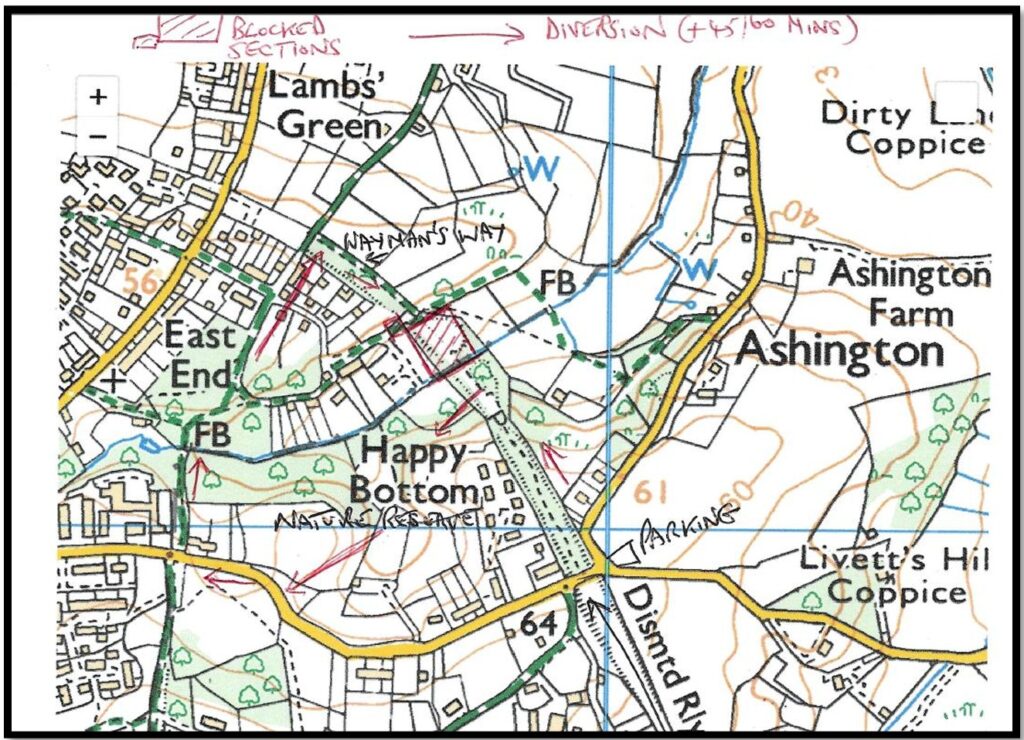
According to the Bournemouth Echo, locals say the permissive path had been open to walkers for at least 35 years but has recently been blocked off with barbed wire, backed up by CCTV, a move the current landowner says is due to several incidents of criminal damage and trespass. However, our correspondent says a further section, which is not on private land, has been blocked illegally. Avoiding this requires a lengthy detour and also takes the walker away from the trackbed. The matter has been reported to Dorset Council so developments are awaited. (Chris Witt; Tim Chant; Bournemouth Echo)
September 2025. Shepton Mallet, Somerset.
An extension to the railway path at Shepton Mallet has opened. The initial section of the greenway begins near the A37 at Whitstone Hall on the eastern edge of Shepton Mallet, and uses the trackbed across Bath Road and Ham Wood Viaducts and passing through Windsor Hill Tunnel. Following an intensive work camp in September, the newest extension to the greenway takes the route as far as Thrupe Lane – making it much easier to travel on to Chilcompton, Midsomer Norton and Radstock. A ceremony to open the route was held at Ham Wood Viaduct on October 17 and author Christopher Somerville, representing the Dinder Estate, composed a poem to commemorate the opening:
Ladies and gents, some 60 years have passed
Since this forgotten railway breathed its last;
The Somerset & Dorset’s rural route,
Where ancient engines puffed and belched out soot,
And slowly climbed the trackbed’s gentle bank
To Masbury, with many a wheeze and clank.
In summer droughts, the grass, as dry as tinder,
Would catch ablaze with every fiery cinder.
In winter, when the Mendip blizzards blow,
Whole trains were buried deep beneath the snow.
This railway holds a thousand stirring stories,
But time takes no account of former glories.
The Beeching Axe chopped all such tales away
And left our line to silence and decay.
The railway died; the birds and bees came back;
Wild flowers and creatures colonised the track.
But all the while, as nature’s stronghold grew,
Walkers and cyclists dreamed of passing through.
This great achievement sprang from mixed-up seeds;
The project had to meet the farmer’s needs.
Plans bit the dust, and tempers nearly blew;
A lot of folk have had to think anew.
At times it seemed we’d never see this day;
But here we are at last – Hip-hip-hooray!
Sean Cowling and John Grimshaw, you’ve been wise.
With flexibility and compromise
You’ve forged a way for all to co-exist –
Cyclist and walker, farmer and naturalist.
For everything you’ve done, great thanks to you,
And here’s to all who made this dream come true!
Christopher Somerville
(poem published with the author’s permission)
Councillor Ros Wyke commented: “This is a really important section of the Somerset Circle. This continuous route of 76 miles is rapidly becoming a reality – already 50 miles of it have been completed and people are using it. The Camel Trail [in Cornwall] and the Tarka Trail [in north Devon] show the impact these routes can have on the rural economy, to say nothing of what it means for the local people. This section will move us towards Chilcompton – the gaps are being closed.”
When completed, the Somerset Circle will form a 76-mile traffic-free circuit linking Bristol, Bath, the Mendip Hills and the Somerset Levels – including the entirety of the Strawberry Line, which will eventually run uninterrupted between Yatton and Shepton Mallet. Greenways and Cycle Routes (GCR) is currently working with local landowners to complete the link to the A37 (which forms part of the East Mendip Way long-distance footpath), with aspirations to run the route over the nearby Charlton Viaduct down to the A361 Charlton Road. Meanwhile, founder of GCR, John Grimshaw, said that he was eager to begin work on a small section of path which would provide access to the Windsor Hill Greenway near the town’s burial ground. (Somerset Live; Greenways & Cycle Routes; Bob Prigg)
In connection with the work undertaken by Greenways and Cycle Routes and its volunteers, they are asking if any members of Railway Ramblers have any information about the railway structure that runs alongside the route. In the original plans it is shown as holding water, but in fact it never has – although there is no obvious culvert. The group assumes it was intended as a soakaway, saying that ‘Our volunteers were delighted to refurbish it in our September workcamp’ (see picture below).

September 2025. Birkenhead, Cheshire.
Initial works to create a brand new £15m park in Wirral may not be far away. The new green space is part of a major project that would also see 1,600 homes built. The Dock Branch Park in Birkenhead on the Wirral Peninsula is a regeneration project being delivered by Wirral Council, looking to transform a former railway line that cuts through central Birkenhead from Green Lane to Wirral Waters. The park will offer a new route for people to move through the town and offer views of Liverpool. Following lengthy delays, plans for the southern section are making progress with the local authority in the process of buying it from Network Rail. In September last year, it was revealed the council had already spent £1.9m developing plans for the park and a bid was being made for £15m from the Liverpool City Region Combined Authority. The northern section of the line, which runs under the town centre, will be purchased later, following surveys of several bridges along the route. The southern section will run alongside the Hind Street Urban Village development, which is expected to include 1,600 new homes. Back in February 2023, people were given tours of the old railway line ahead of the new scheme. At that point, the project included plans for a new performance space and a museum exhibition, though the latter has since been scrapped. (Birkenhead News; Forgotten Relics)
May 2025. Chelfham Viaduct, Devon.
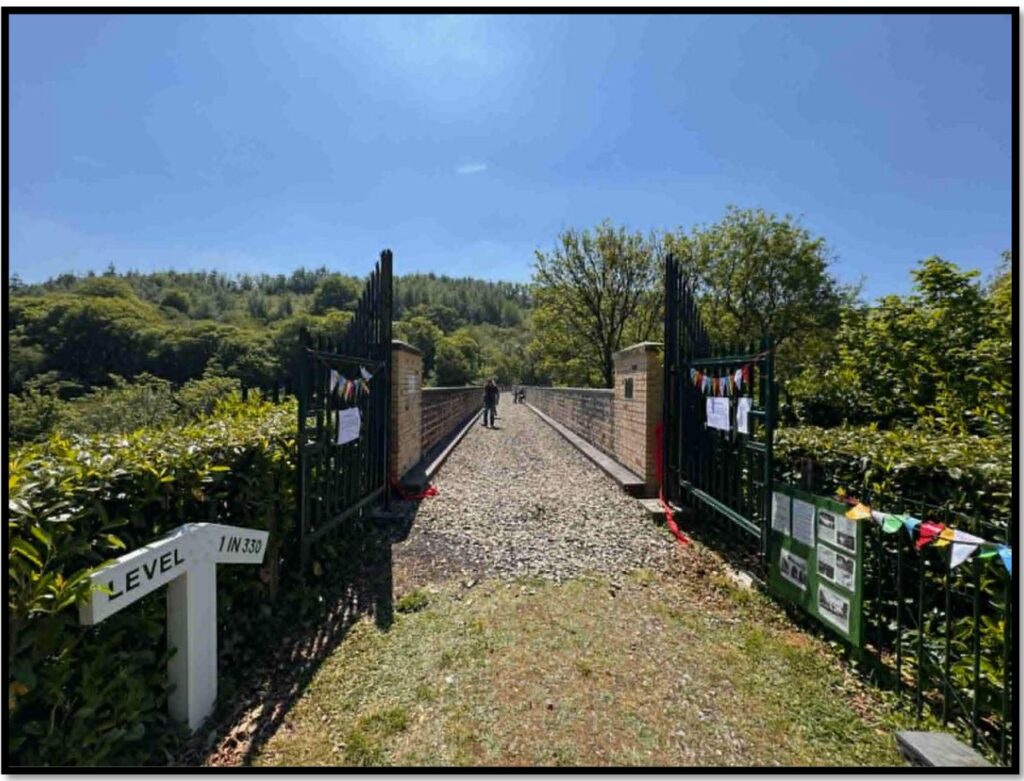
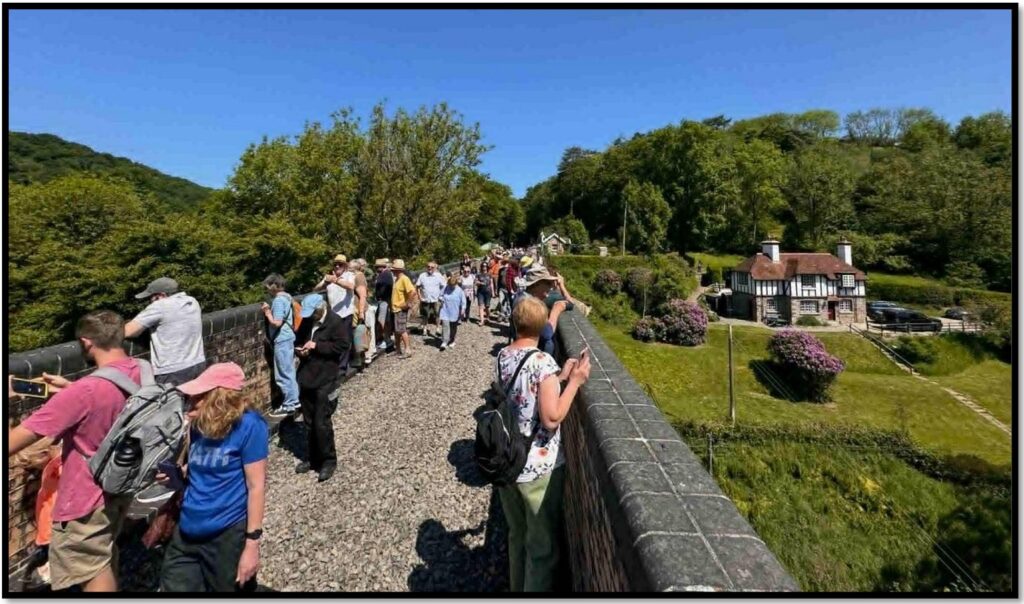
Although in some ways ‘old’ news, one of those people fortunate enough to attend the rare opening of the Lynton & Barnstaple Railway structure has been kind enough to send us some pictures of the weekend – accompanied by some glorious weather!

August 2025. Merthyr Tydfil, Glamorgan.
Glamorgan. A restoration scheme is underway at Pont-Y Cafnau Bridge in Merthyr Tydfil, a structure believed to be the world’s oldest surviving iron railway bridge. Built in 1793 by the Cyfarthfa Ironworks Company, it crosses the River Taff and formerly carried a leat from the Taff Fechan river as well as the 4 foot gauge Gurnos Tramroad, which supplied Cyfarthfa Ironworks with power for a water wheel and the essential ingredient of limestone from local quarries. Its unique design featured an upper water channel, a middle tramroad deck, and a lower water channel – a three-storey engineering solution.
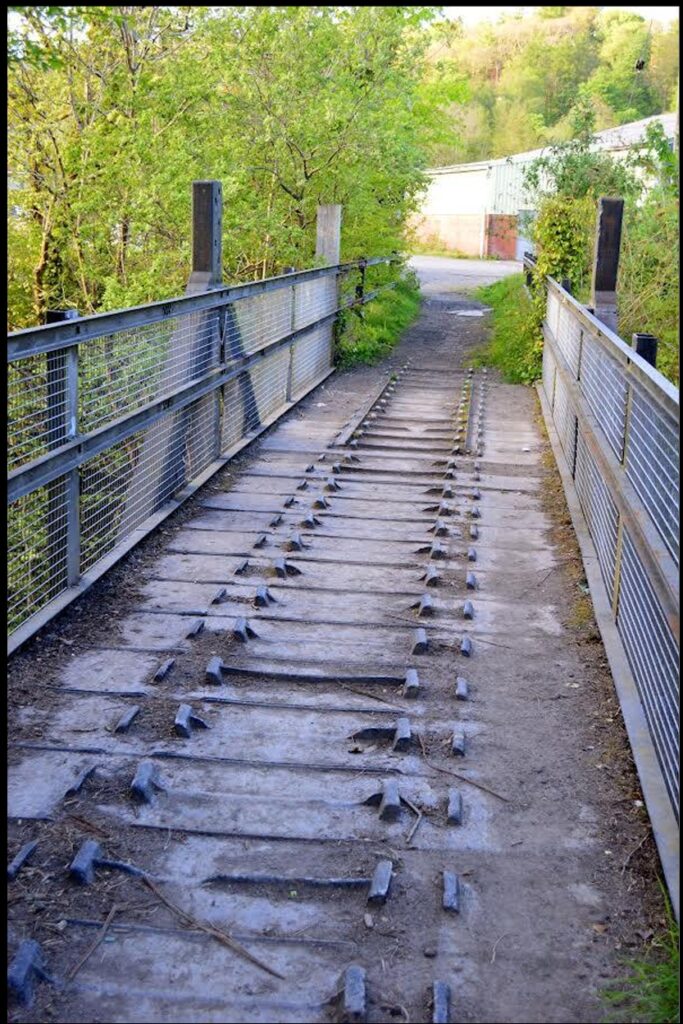
The bridge’s significance has been recognised with both Grade II* listing and scheduled monument status. The restoration forms part of a broader £4.5 million heritage project that will also enable improvements to the Grade I Listed Cyfarthfa Castle. (Wales Online, Chris Parker, David Thomas)
August 2025 Anglo-Scottish Border Region.
Scottish Borders Council has appointed Turner & Townsend to lead the feasibility study and business case development for extending the Borders Railway from Tweedbank to Hawick and Carlisle. This move comes as part of efforts to build on the success of the existing rail link. In February, the project received approval to begin assessing the feasibility of the extension, following confirmation from the Department for Transport. Turner & Townsend’s work will involve comprehensive assessments of the potential economic impacts and challenges associated with the proposed extension, which aims to improve transport links in the Borders. The extension is supported by funding commitments of up to £10M from the UK and Scottish governments through the £450M Borderlands Inclusive Growth Deal, a regional initiative designed to stimulate economic growth and community development. While the current appointment focuses on feasibility and planning, the project marks a significant step forward in discussions about reviving rail connections that were lost following the Beeching cuts of the 1960s. Campaigners have long pushed for the restoration of the line beyond Tweedbank, citing the opportunity to support regional regeneration and sustainable transport. The success of the Borders Railway has underscored the value of improved rail infrastructure in the region, with passenger numbers regularly exceeding expectations. However, challenges remain, including the need to navigate environmental concerns, secure full funding, and integrate the extension with existing transport networks. The feasibility study led by Turner & Townsend will be crucial in addressing these issues and setting out a viable path for the project. (New Civil Engineer)
August 2025, Singleton, Sussex.
Following three years of extensive work by the South Downs National Park Authority, the Centurion Way has now been extended northwards from West Dean, passing Singleton and ending near to Cucumber Farm. The improvements include almost 2km of new trail, two new entry and exit points and around 1.5km of newly-widened pathway alongside the A286 for pedestrians. Education boards along the extension tell the history of the railway line and signage will direct people to nearby local amenities, such as West Dean Gardens, Weald and Downland Living Museum and Singleton village. The Centurion Way follows the ex-Chichester to Midhurst line, the final section of which closed in 1991. Further refurbishments will take place over the next two to three years to extend the route to Cocking Hill and link with the South Downs Way. Once complete the route will provide a continuous path for walkers and cyclists from Chichester Harbour and the Witterings to the South Downs Way.
The jewel in the crown of this new section is undoubtedly the site of Singleton Station, where the undergrowth has been cleared away, the platforms renovated and a replica running-in board installed. A ribbon-cutting ceremony was held there on 20 August, and the Deputy Lieutenant of West Sussex, Simon Knight, commented: ‘This marvellous addition of a new section of the Centurion Way has been achieved through remarkable collaboration initiated by the South Downs National Park Authority who have worked closely with landowners – The West Dean Estate, The National Trust and The Cowdray Estate – as well as West Dean and Singleton Parish Councils and the Friends of Centurion Way and Chichester Cycle Forum. All involved are congratulated on this great new addition to the county’s cycle network’. (southdowns.gov.uk)
August 2025. Cirencester, Gloucestershire
As part of the Cirencester History Festival, the former Cirencester Town station will be open free to the public as the Old Station Experience project on Saturday 25 October and Saturday November 1. The details of the event are currently being finalised but Festival Manager, Clare Wheatley, believes the timings will be 11:00 to 16:00 on both days. The station was opened in 1841 as the terminus of a broad gauge line from Swindon, via Kemble, by the Cheltenham and Great Western Union Railway. Absorbed by the GWR in 1843, the line became a 5-mile-long branch in 1845 when the GWR extended the line from Kemble to Standish Junction on the Bristol and Gloucester Railway. The line closed to passengers in 1964 and freight in 1965. It was well known in its final years for operating lightweight four wheeled diesel railbuses. The Cirencester Community Railway Project is currently working to re-establish the rail link to Kemble, possibly as a Very Light Rail route. The Old Station Experience is sponsored by the Daniel Bingham Foundation and will include guided tours of the station building with architect Jonathan Rixon while it’s stripped back for critical refurbishment. It will also include an exhibition featuring archive photographs, plans and maps and an audio exhibition. If any members have any items that may be of interest, or memories of the station when open, the organisers can be contacted at hello@cirencesterhistoryfestival.org (Malcolm Broad)
August 2025, Lichfield, Staffordshire.
Work continues on the extension of the foot and cycle path from Brownhills to Lichfield. The trackbed was cleared by the local volunteer group, Back the Track, so the track lifters could get in and remove the rails. Any rails that can be reused are going to the Severn Valley Railway. The ballast will be levelled off and rolled to give a good surface for walking and cycling. Back The Track have been working on behalf of Lichfield District Council to get it to a state where an insurance assessor could check whether they are willing to provide public liability insurance. The group believes this has now been achieved and are now waiting for Lichfield District Council to sign a 50-year lease with Network Rail. Several new access points have been added and, as can be seen in the picture below, it is ready to be used. The aim is to link the Lichfield section to The McClean Way, an established walking and cycling route which runs from Walsall to Brownhills. (Tim Kitchen, Back the Track)
July 2025. Torrington, Devon.
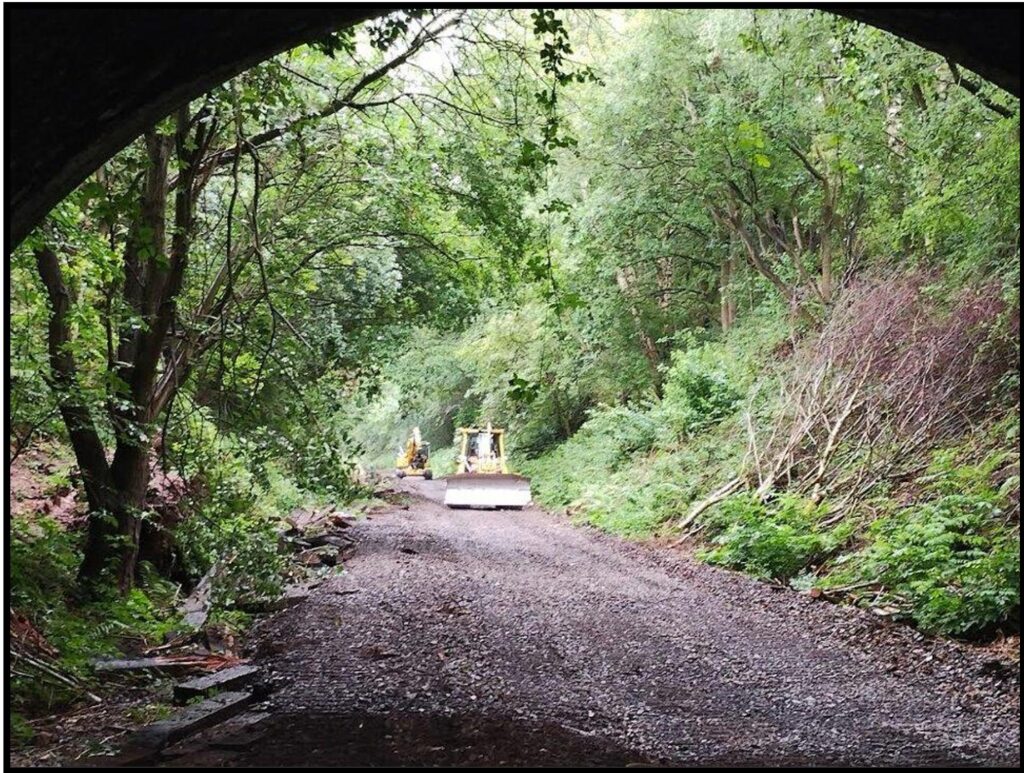
Sunday July 27 2025 marked the centenary of the opening of the North Devon & Cornwall Junction Light Railway – the last standard-gauge steam operated branch line to be built in England. Running from Torrington to Halwill Junction, the light railway was intended to connect towns in North Devon with the lines from Okehampton to Bude, Launceston, Wadebridge and Padstow. Its construction was partly government-funded in a bid to provide local employment in a depressed economy following the end of World War I. The route incorporated that of the narrow-gauge Torrington & Marland Railway which had been built to serve the area’s ball clay workings at Meeth and Marland. Unfortunately the railway only operated for forty years before closure, although freight trains continued on a section of the line until 1982. Much of the route is now part of the Tarka Trail long-distance footpath and cycle track.
The ND&CLJR was the last project to be completed by the well-known light railway promoter Lt-Colonel Holman Fred Stephens, who engineered the route and obtained the necessary Light Railway Order authorising construction. He subsequently stepped in to complete the construction after the principal contractor went into administration, and then served as the first Managing Director of the railway company. The line remained legally independent until nationalisation in 1948, even though the trains were operated by the Southern Railway from the outset.

To mark the centenary of the line, the Tarka Valley Railway, which is working to develop a heritage railway and has a short running line which it hopes to expand, hosted a gala weekend at Torrington Station. Various artefacts were on display, including the headboard from the last train in 1965, along with a number of fund raising stalls for local charities. Regular train services were operated on the short line using preserved ‘Pacer’ Railbus 143617. The Colonel Stephens Society (CSS), which studies and celebrates the work of the Victorian entrepreneur, was delighted to participate in the centenary event, with two of its committee members staffing an information stall. The Society has commissioned a commemorative plaque to mark the centenary, which will be displayed at Torrington Station. The plaque was presented to Councillor Doug Smith of Torridge District Council, a former Mayor of Torrington and current TVR Chairman, by Chris Jackson from CSS who is also the editor of the CSS magazine The Colonel and Curator of the Colonel Stephens Railway Museum based at the Kent & East Sussex Railway in Tenterden. He was accompanied by CSS Secretary, John Ball. (Dana Wiffen)
July 2025. Lambley Viaduct, Northumberland.
Lambley Viaduct, which is owned by the South Tynedale Railway Preservation Society (STRPS) and forms part of the South Tyne Trail, was closed in July after a section of masonry fell from one of its arches. The STRPS commented: ‘Specialist engineers are continuing to check out the situation at Lambley Viaduct and are creating a plan for the work to be completed as soon as possible‘, while a spokesman for Northumberland County Council said: ‘For public safety, the footpath underneath the bridge at this point is also closed, but a short alternative route is available using a footbridge to cross the South Tyne just downstream from the viaduct, enabling walkers to still undertake the route from start to finish‘. (Hexham Courant; Mark Jones)
July 2025. Waverley Viaduct, Carlisle.
There has been a long-running campaign to get this structure reopened as a footpath, which was closed on safety grounds in 2009 and is Grade II Listed. Now Historic Railways Estate, which manages the bridge, has submitted an application to Cumberland Council to carry out structural repair works. This says: ‘The viaduct has been determined, by assessment utilising nationally adopted standards, to be at high risk of damage, undermining and potential collapse due to the scouring effects of the river’. Access to the site would need to be agreed with the local landowners, while the proposal envisages the creation of a temporary causeway to reach the bridge piers from the north bank of the River Eden. The parapet fences, which have been damaged by vandalism, would be replaced by a 1.4 metre high mesh panel fence, and the installation of a waterproofing system on the viaduct deck. The application does acknowledge the potential – and public desire – for a footpath, ‘with a view to Railway Paths Ltd. taking over a lease of the viaduct in the future‘. (News & Star: The Cumberland News; Forgotten Relics)
July 2025. Uckfield, Sussex.
Plans to convert Uckfield Signal Box into a micro pub have been approved by Wealden District Council, following receipt of 45 letters of support for the proposal. The box used to control the level crossing until the station was moved north of what was the A22, and later served as a taxi office. However, it has been vacant for several years and so the proposal from Three Acre Brewery, a local craft beer producer, offers the building, which is owned by Uckfield Town Council, a new lease of life. The brewery plans to invest several thousand pounds in renovating and refitting the signal box for its new use, and hopes that some of its customers will be passengers from the railway. One resident wrote: ‘Exactly what Uckfield needs – a small-business owner who comes from the area and cares about the area, rejuvenating a classic bit of Uckfield‘. (The Argus; Forgotten Relics)
July 2025. Heighington, County Durham.
Campaigners are celebrating after raising £300k to save one of the world’s oldest railway stations. Dating back to 1826, Heighington Station, in County Durham, was part of the Stockton and Darlington line, but the building has been shut since 2017 and efforts to revive the dilapidated station have hitherto been unsuccessful. Now though, its future has been secured thanks to a ‘significant donation‘ from Hitachi Rail, as well as a crowdfunding effort. Niall Hammond, Chair of the Friends of the Stockton and Darlington Railway, said: ‘This relatively simple, humble building is the inspiration of all railway stations that came afterwards right across the world‘. The building was ‘effectively built as a prototype-railway station before the concept of the railway station had been fully developed’, according to Historic England. September 27 2025 sees the 200th anniversary of the opening of the Stockton & Darlington, the first public railway to use steam locomotives. In 2024, Heighington was added to Historic England’s Heritage at Risk Register but it can now be brought back into use. (BBC; Forgotten Relics)
July 2025. Glenfield Tunnel, Leicestershire.
A miniature railway has been installed in part of the mile-long Glenfield Tunnel and will be open at weekends in September. The Leicestershire Industrial History Society offers guided tours at certain times of the year and has now laid about 50m (165 ft) of track in the tunnel, hoping to increase this to 76m (250 ft) in the future. A spokesman for the Society says: ‘We want to give the passengers a proper experience of rattling along at a slow speed, which would have been the speed in the early days of the tunnel‘. Tickets for the miniature railway experience are free, but visitors are asked to make a donation. (BBC; Forgotten Relics)
July 2025. Manchester, Lancashire.
Phase two of the conversion of Castlefield Viaduct in Manchester into an elevated sky garden will see the landscaped section more than double in length. Following a funding boost of more than £2.5m, the National Trust said the money would be used to further transform the 125-year-old, Grade II-listed structure. The conservation charity’s plans include building winding paths through planted areas to ‘encourage people to take time out from the busy city below and connect with nature‘. Plants were first bedded along a section of the viaduct in 2022 by the National Trust as part of efforts to create an elevated green corridor in the city centre. Current visitors can walk through a series of green spaces and gardens before seeing an overgrown section behind a glass wall. Phase two of the viaduct’s transformation plan will extend the visitor attraction from 164 yds to 383 yds. National Highway’s Historical Railways Estate, working in partnership with the National Trust, has committed £2.4m to fund a significant part of the structural and foundation work that is needed for the expansion. Further £100,000 contributions come from Manchester City Council and the Greater Manchester Combined Authority. The Railway Heritage Trust is also adding £150,000. The structural work is expected to start in the autumn, with the new section likely to open in the summer of 2026. (BBC; Forgotten Relics)
June 2025. Wirral Way, Cheshire.
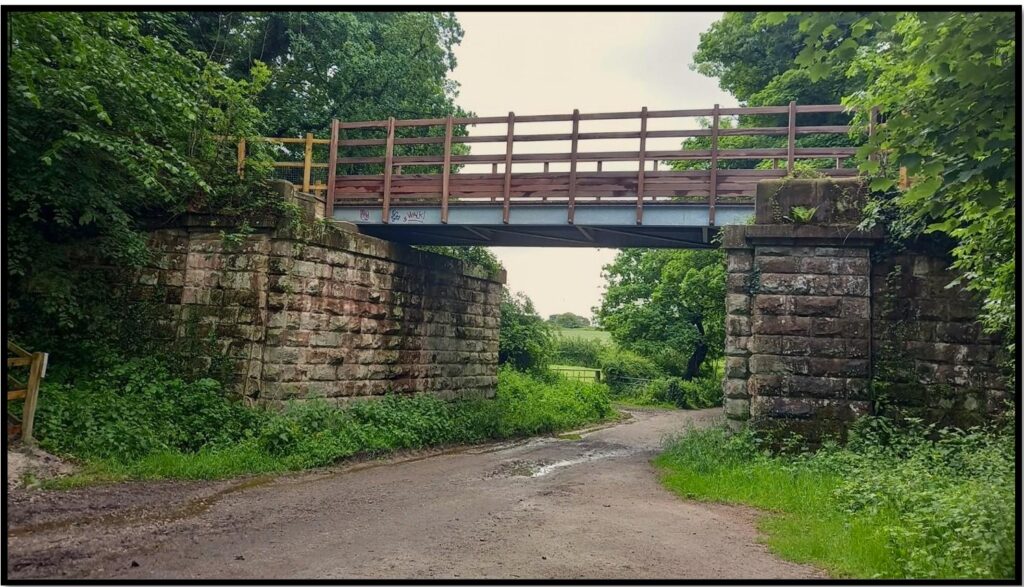
Cheshire West Council have recently completed some work on the section between Hooton and Neston, putting in a completely new surface and cutting vegetation back. Last time our correspondent went there in 2023, it was really muddy even in July. This time there were still some puddles in places because they have not dug channels to the sides to allow water to drain off, also there is nothing to stop water accumulating under the A540 bridge. There are new sign posts at the start on the bridge at Hooton, previously the one finger post was obscured by bushes. They have also replaced a bridge over Cuckoo Lane just east of Neston which was missing for quite a while (see photo). (Ian Mumford)
May 2025. Tumby Woodside, Lincolnshire.
Well, here is a chance to resurrect a complete station! What remains of Tumby Woodside – one of the places immortalised in the Flanders & Swann song – came on the market in May with a rather intriguing estate agent’s sign that read: ‘For sale: historic railway development inc. railway station, signal box build and engine shed build all with planning permissions in place’. The site is heavily overgrown near the road but the area around the station building has been cleared, revealing a section of platform. As for the station building itself, all its previous dereliction has been removed leaving a brick shell that is structurally ready for development.
In short, the perfect railway enthusiast’s restoration project! Planning permission exists ‘for the conversion of the station building into a 3-bedroom residential property, reinstatement of the engine (sic) shed as a garage/ workshop, and the reinstatement of the signal box into a cottage for holiday purposes‘. This is the most interesting part as a concrete base has been installed for the shed to be (re)built (this was a goods shed, not an engine facility), while the signal box was situated next to the level crossing, at what will be the other end of this property, alongside the extant ticket office – now a (separate) private house. Apparently, the foundations of the signal box remain, albeit hidden in the long grass. The total area comes to approximately 1.2 acres, with the station building and goods shed area set back behind the stationmaster’s house – another private residence that sits between the station and the road. The station and line closed in 1970. (RR)
May 2025. Lartington, Yorkshire.
The somewhat crumbly remains of Lartington West Signal Box, just to the north of the site of Deepdale Viaduct, where only the impressive brick abutments remain, are up for sale for £25,000. The box used to control movements at Lartington Quarry Junction which gave entry to the Cat Castle Quarries. How about this as a permanent base for the Club AGM?! Road access to the box is along the old trackbed of the North Eastern Railway’s ‘Stainmore’ line which makes it an even more appropriate location. (RR)
May 2025. Norham, Northumberland.
One of the most complete disused stations in the country was recently up for sale at the not too unreasonable price of £550,000, given this includes a four-bedroom house, a range of other station buildings including a virtually unchanged porters’ room and the booking office, platforms, signal box, goods shed, lime depot, coal drops and goods dock. The property covers 3 acres including a paddock. The last stationmaster at Norham bought the property in 1970 and turned it into a live-in museum – no small feat of restoration given the parlous state of the station after closure – and was rewarded for his efforts when the station was granted Grade II listed status in 1988. After his death the next owners closed the museum but have retained the site in excellent condition. It is to be hoped those who purchase it now will do the same. Readers are encouraged to visit Paton & Co’s website for a marvellous gallery of photos of the station. (RR)

May 2025. Woody Bay, Devon.
Exmoor National Park’s planning committee has overwhelmingly rejected the extension plans of the heritage Lynton & Barnstaple Railway, who were applying to take their line on to the edge of Parracombe. News reports seem to suggest that the Railway did not convince the planners that enough benefit would accrue to the local community from building the extension. One major landowner said they had not even been approached about the potential use of some of their land. The L&B project, taken as a whole, is a massive undertaking on the scale of the Welsh Highland Railway, which required serious political backing to see it completed. Unless the L&B can garner similar support, full restoration of the line is likely to remain a pipedream. (RR)
February 2025. Riddings Viaduct, Anglo-Scottish Border (Dumfriesshire /
Cumberland).
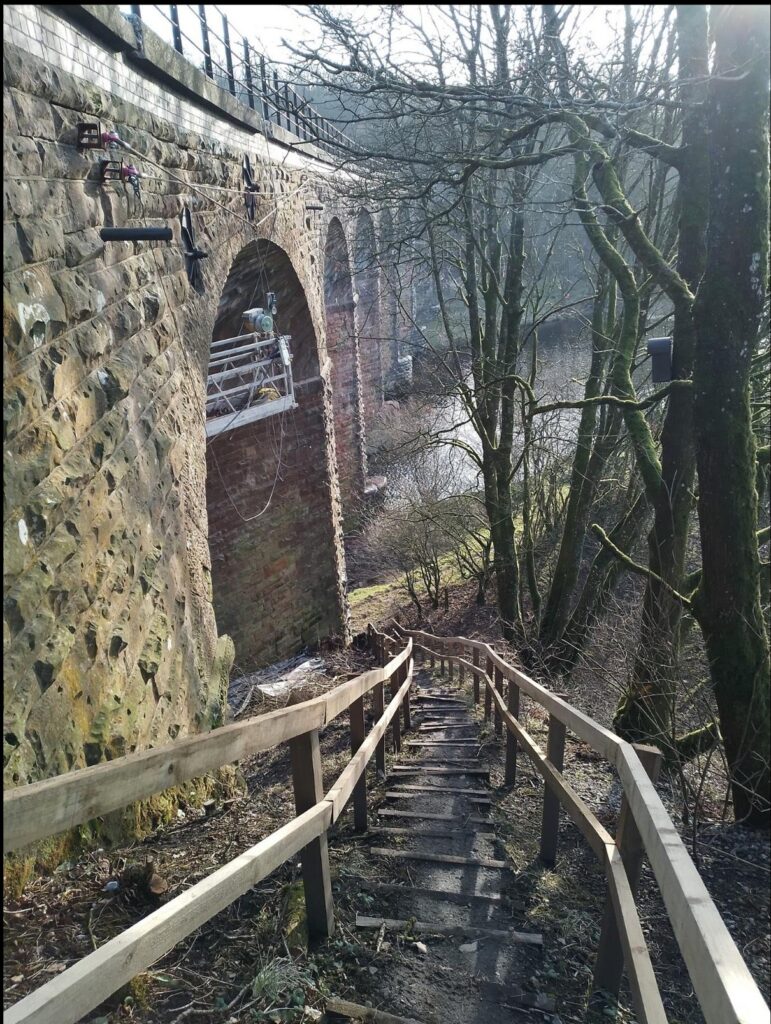
A major restoration project is currently underway at Riddings (or Liddel) Viaduct, which is managed by National Highways (NH). To facilitate these works they have built brand new post and rail fencing to steps down on the Scottish side which enables views from the river bank. Apparently, they might dismantle this fencing on completion of the project, unless the community would like its retention. Our correspondent is also on the local Canonbie & District Community Council and has secured agreement for the Council to ask NH to leave things in place at the end of the work. NH describe the structure as ‘a skewed nine-span masonry arch viaduct faced in red sandstone ashlar with stone arch barrels supported by stone piers and abutments. The spandrels, parapets and wingwalls are constructed from a similar grade of stone’. Our correspondent wonders whether Railway Ramblers might support a campaign asking for the return of public access to walkers. For some years now the viaduct has been fenced off. The Chair of the Langholm Walks Group has written to National Highways in this regard and a response is awaited. Alan Williams comments: ‘It might only ever be that the public could cross the viaduct from the Scottish side and then return the same way, because there is, of course, no ‘Right to Roam’ on the English side, and legend has it that the occupier of the Riddings Junction station site has been notoriously unfriendly to railway enthusiasts who have tried to explore. With regard to the present renovation project, it is rather ironic that the viaduct from which the public is barred will be benefitting from repairs to the parapet handrails’, a point unintentionally reinforced by a statement from NH which claims their work will allow ‘people in both England and Scotland to enjoy its beauty for many years to come’. Riddings Viaduct carried the Langholm branch of the North British Railway across Liddel Water, which forms the border between England and Scotland at that location, and closed with the branch in 1964. (Alan Williams; National Highways)
February 2025. Preston, Lancashire.
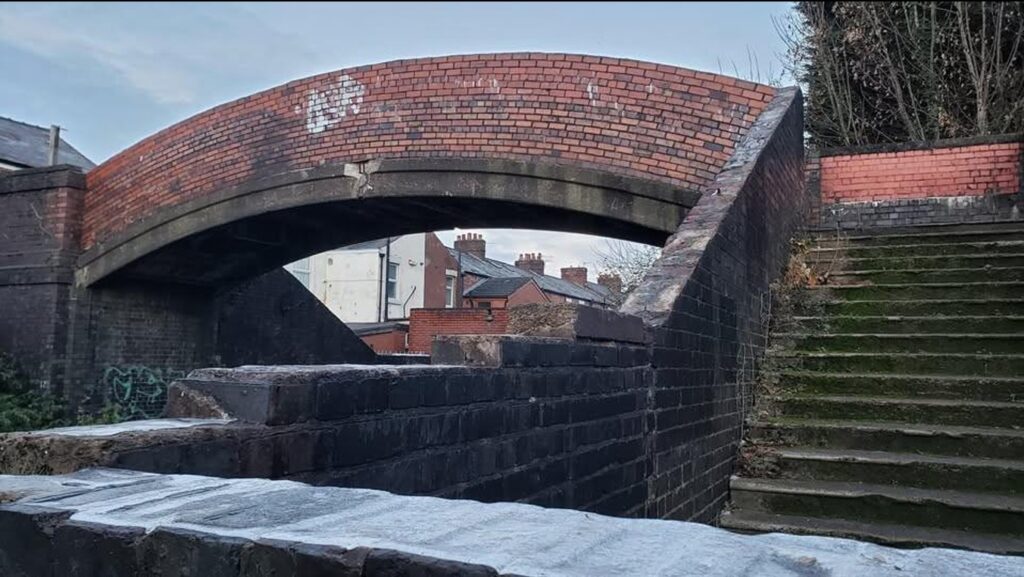
Network Rail is working alongside community groups to clear up some of the rubbish which has been dumped over many years on the Longridge branch in Preston. Illegal fly-tipping has blighted this branch at various points along its route out of the city, including the cutting between two sections of Miley Tunnel. The current clearance is concentrating on the area around the old level crossing over Skeffington Road, which is just north of the site of Deepdale Junction. An LNWR signal box once stood at this location, controlling the junction with the line to Deepdale Coal Concentration Depot. East towards Longridge, the line has been converted into a path and cycleway, and this would be the ideal solution for the western section. Including Miley Tunnel would extend the path to Roeburn Hall, a residence for students at Preston University, just shy of the main line. That said, locals seem to gain access to the undeveloped section by the distinctively curved brick footbridge (see photo), and consider a walk through the tunnel as ‘every Prestonian kid’s rite of passage’.
Meanwhile, others are hoping the clean-up might lead to use of this section as a test track for the long-mooted trams. Last year Trampower, the organisation behind the plans, said the scheme had not moved forward because of a dispute between themselves, Preston City Council and Network Rail about clearing the site. Network Rail responded saying there was nothing to stop Trampower getting started. Trampower are also interested in using the old station building at Ribbleton as offices. The building is apparently a private residence though images show it to be semi-derelict. (NR, Forgotten Relics, Railscot)
February 2025. Walsall to Lichfield, Staffordshire.
Significant progress is being made along the Walsall to Lichfield path, known as the McClean Way. The volunteer group, Back the Track, have finished clearing the line from Brownhills to Lichfield, while Sustrans have started surfacing the section between Pelsall and Brownhills. Work commenced earlier this month (February) on the section between the A5 bridge and the M6 Toll Bridge, which is the last remaining 10% of the route to Lichfield to be cleared. When this section is finished a safety fence will be needed on the Toll Bridge and access points sorted.
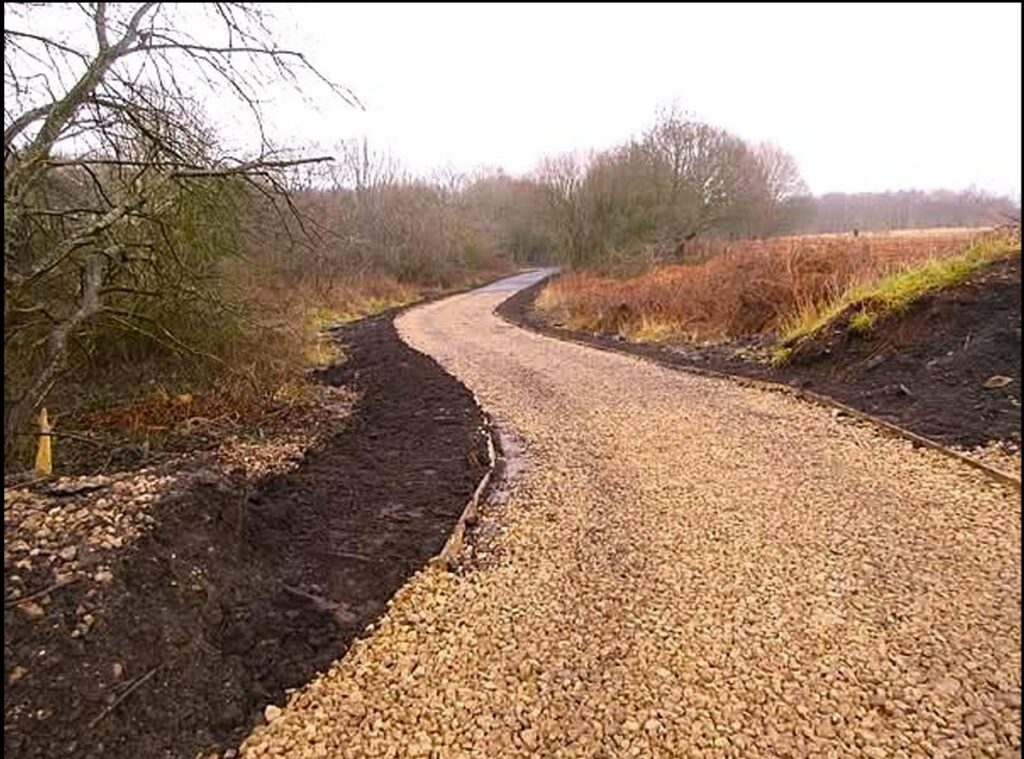
Also twenty bags of rubbish were collected under Wall Lane Bridge where it had been dumped over the years. Meanwhile, the track upgrade from Station Road, Pelsall has now joined up with the section already completed by Ryders Hayes. Litter picking from Station Road, Rushall towards Ryecroft means the area is looking a lot tidier. Down at the Pelsall end a long section has now been tarmacked. There will be a gap under Railswood Bridge while an archaeological dig takes place so the contractors will move down to Station Road to work from that end. (Tim Kitchen; Back the Track)
January 2025. Smardale Gill Viaduct, Westmorland.
The Northern Viaducts Trust have reported that ‘repairs to and replacement of stones in the piers and arches and repointing is complete!’ There had been some concern that the Trust would not have the funding to maintain the structure but the recent works were completed before the end of 2024 and within budget. The repairs included the placement of 130 new stones in the viaduct, which is in a local nature reserve and is open to walkers. (Northern Viaducts Trust)
January 2025. Maerdy, Glamorgan.
Further to the item in RR 183, the fifth and final phase of the Maerdy branch line’s conversion to the Rhondda Fach Active Travel Route was due to be considered by the local authority’s planning committee on January 16th. This includes the last undeveloped section from about 1km south east of Ferndale station site to the point near Pontygwaith where the A4223 road has buried the trackbed. A permanent tarmac surface will be laid and link paths to nearby amenities upgraded. Underbridge decks will be renewed but existing abutments and piers retained. Phases 1 to 4 are either complete, under construction or already have planning permission and await start of work. (Chris Parker)
January 2025. Peebles, Peeblesshire.
It has been reported that the last remaining building from the North British Railway station at Peebles is to be transferred into the ownership of Peebles Community Trust. Despite being described in the Border Telegraph as ‘the old station building’, it is in fact the goods office, located some distance from the site of the old station itself, in fact, opposite the goods shed. To be fair, it was built in a similar style to the much larger Cardrona station building, which survives as a café just down the line, and is of greater architectural merit than might otherwise be imagined. The Trust will take on the task of raising funds for the restoration of the building which stands in not-so-glorious isolation at the edge of a car park on the site of Peebles East goods yard. After closure of the railway, the building became the local coal merchant’s office before falling into disuse in recent years.
Malcolm Bruce from Peebles Community Trust said: ‘we are committed to doing what is required to heritage standards thus protecting the history of the building and in particular the railway past. No decisions have been taken regarding the final use for the building and we would be happy to hear any ideas people may have’. The transfer of ownership was made possible through the community asset transfer process which allows community bodies to request to use, lease or purchase land and buildings owned by public authorities. (Border Telegraph, Forgotten Relics, Branch Line Society)
January 2025. Larpool Viaduct, Whitby, Yorkshire.
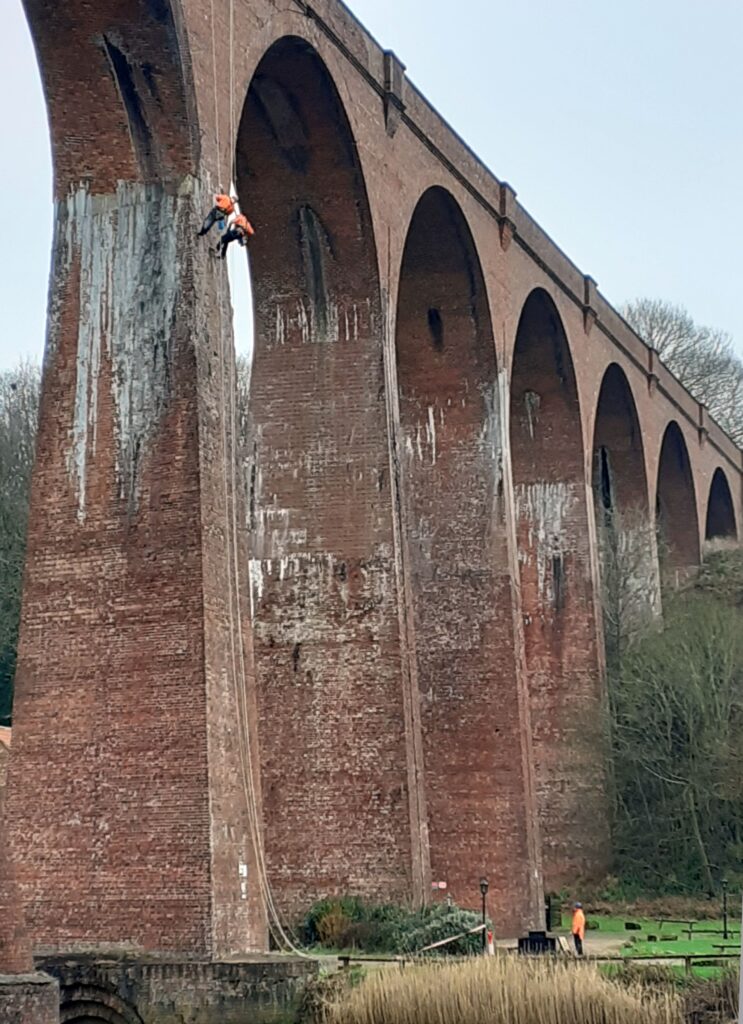
Yorkshire Area Coordinator, Jane Ellis, took the photo shown on the following page on 20th January. It features maintenance men abseiling down Larpool Viaduct, Whitby with hammers to dislodge large chunks of loose masonry. Not a job many would like on a cold, damp January day! Presumably this is funded by Sustrans, who own this Grade II listed structure which carries the former Whitby – Scarborough line. It’s also an integral part of the Dover to Thurso East Coast cycle path. (Jane Ellis)
January 2025. Little Eaton, Derbyshire.
Part of the former railway line from Ripley to Little Eaton, Derbyshire is being converted into a multi-use greenway for pedestrians, cyclists, and horse riders. The greenway will connect to existing footpaths, bridleways and roads, and will be part of the Derby City to Ripley cycle route. Derbyshire County Council is converting the southern 5.6 km (3.5 mile) section of the former Midland Railway Ripley Branch Line into a greenway which will run from Duffield Road in Little Eaton to Rawson Green (the site of Kilburn Station). The project will include vegetation clearance, grading, surfacing, fencing, and habitat improvement. The greenway will also connect to the local highway network and extend NCN Route 54. This would only leave a short gap of about two miles to the Ripley Greenway which itself uses just over two miles of the northern section of the branch from Lumb Farm to the northern outskirts of Ripley itself. The missing section could be completed by using space alongside the B6179 as far as Denby, where the attractive station master’s house survives, and then the trackbed appears clear to Rawson Green. The Ripley Branch opened in 1855 for freight traffic, mainly transporting coal. Passenger services on the line ceased in the 1930s but the line remained in use to serve a coal washing plant at Denby until 1999. (Bob Prigg)