HRE GROUP PRESS RELEASE: Wednesday 9th October 2024
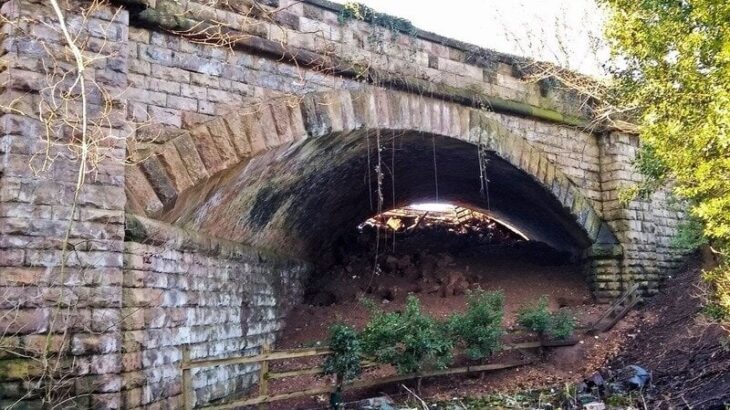
National Highways has been granted planning permission for the infilling of a historic railway bridge in North Yorkshire, carried out under permitted development rights which it misapplied.
The masonry arch on Rudgate near Tadcaster formed part of the Historical Railways Estate, a collection of 3,100 legacy structures managed by the state-owned roads company. Dating from the 1840s, regarded as the pioneering first phase of railway construction, the bridge was infilled in spring 2021 at a cost of £133K, shortly before the Government intervened to stop a programme of more than a hundred similar schemes because of concerns over its negative social impacts.
The bridge was not listed, but according to guidance from Historic England, “When it comes to purpose-built railway structures, most pre-1850 buildings will often be of international significance as being among the earliest railway structures in the world, and even partial survivals need to be assessed carefully.”
National Highways exploited rights known as ‘Class Q’ which allowed it to carry out the works without public comment or scrutiny from statutory consultees. The rights only apply to temporary works in emergency situations, but the infilling was always intended to be permanent and there were no meaningful safety concerns about the structure. The firm’s contractor also felled several protected trees without authority.
The most recent condition report prior to infilling recorded Rudgate Bridge as being in Fair condition, with minor defects typical of those found on many brick or stone arches. The Examiner’s only recommendation was to repair a nearby fence.
The bridge had an assessed capacity of 32 tonnes. The narrow country lane passing over it was prohibited to vehicles of more than 3 tons unladen, although it was used by some heavier vehicles, including agricultural machinery.
North Yorkshire Council asked National Highways to submit a retrospective planning application after the company retained the infill for more than 12 months without its written consent. After six months considering the matter, the Council has granted retrospective planning permission following consideration and approval by its Planning Committee.
The Officer’s Report said that the Council had no evidence that there was “an alternative approach that could have been taken that would have secured this benefit of long-term stabilisation of the structure.” However, the ‘long-term stabilisation’ of thousands of masonry arch bridges across the UK is routinely secured by modest, cheap, simple and sympathetic repairs.
Graeme Bickerdike, a member of The HRE Group of engineers, heritage campaigners and active travel advocates, said: “It’s disappointing to see more of the country’s railway legacy lost in these circumstances. National Highways’ actions were unjustified, destructive and unlawful, both in terms of misusing Permitted Development rights and cutting down protected trees.
“This sorry saga is indicative of how little value the company places on the historic assets in its care. Fine words in public proclamations cannot mask the troubling culture demonstrated by its actions, both at Rudgate Bridge and elsewhere, including the infilling of bridges needed for future sustainable transport projects.
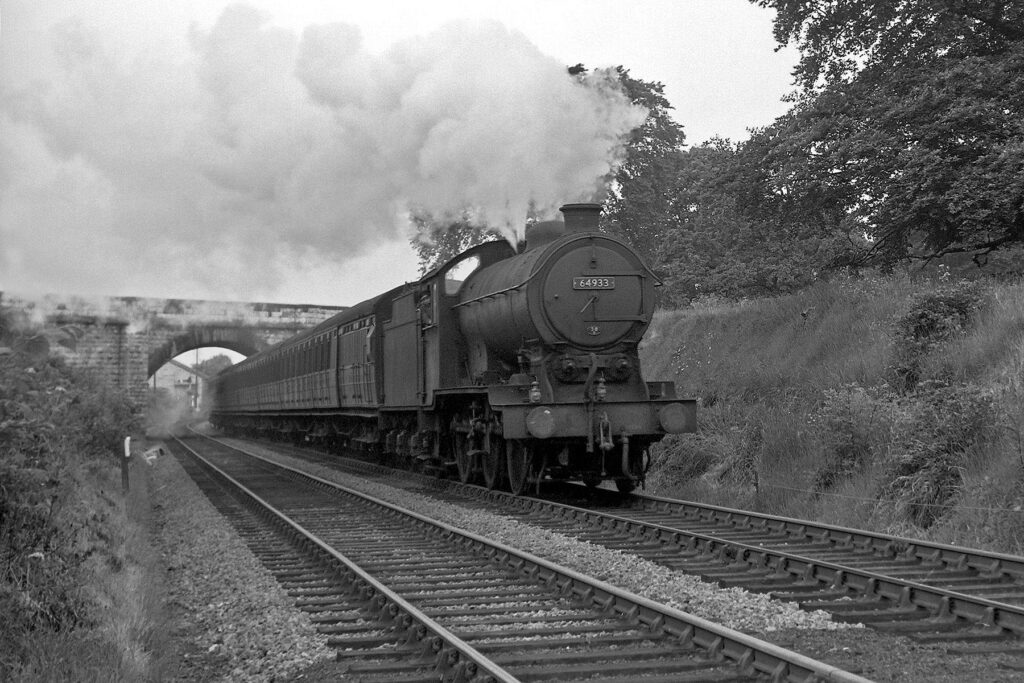
An archive photograph showing a train passing beneath Rudgate bridge in 1957. (Credit: The Transport Treasury Ltd (MM292))
“Whilst there are now safeguards in place which should ensure that no schemes are forced through like this again, the fact that this one has now been officially sanctioned does not sit comfortably. Public bodies should set an example for the rest of us to follow. National Highways behaved disreputably at Rudgate Bridge, but has got away with it.”
 Click for